Introduction
Is your filtration system plagued by leaks, contamination or frequent maintenance? Often these problems stem from poorly sized liquid filter housings. This article will provide you with a clear and practical selection guide to help you choose the most appropriate housing for your specific application, keeping your system safe, minimizing risk, and saving you time and money.
What is Liquid Filter Housings and Its Functions?
Liquid filter housings are the components of a liquid filtration system used to house filter elements. Sometimes this can make these filter vessels appear to be only housings and not responsible for filtration. But we should know that this is a misconception.
In fact, filter housings play an important role in protecting filter elements and supporting filtration. It is the critical load-bearing structure that allows filtration to actually take place and operate in a stable manner.
It is the housings with the proper structural design (sealing, deflecting, and pressurizing) that ensure that the liquid passes through the filter media in the proper route, thus separat
Bag Filter Housing Selection
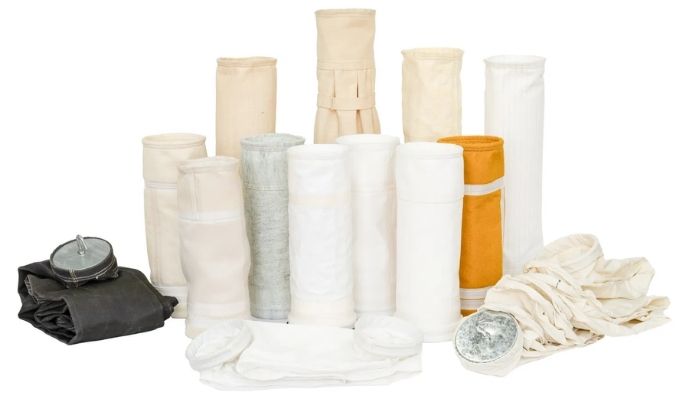
For applications using replaceable filter bags, compare bag filter housing configurations by flow, pressure, temperature, material, connection and filter-bag compatibility. Review single-bag housings for moderate flow or batch duty and multi-bag housings where greater capacity or maintenance flexibility is required. Final selection should be based on complete operating data and an approved drawing.
ing the solids from the liquids.
Components of Liquid Filter Vessels
High quality components are the prerequisite for a high performance filter housings. This part will help you clarify the evaluation points of each key component of Housings, so as to better judge the quality of the product.
Housing Body
Housing body has to bear the mechanical and thermal stresses caused by the working pressure from inside, and it is the core pressure-bearing structure to ensure the safe operation of the filter. Therefore, it must have excellent quality.
High-quality housing body usually meets the following requirements.
- Uniform weld seam, no porosity, no cracks
- Sufficiently large wall thickness (to meet pressure requirements), not easy to deform.
- The material properties can be matched to the working conditions and can be tested with verifiable performance.
Cover
A good cover has fine workmanship, flat appearance, and more importantly, is easy to disassemble in actual operation.
Seal Part
The quality of the seal part must be up to standard, otherwise there will be leakage problems during operation.
This can be easily determined by checking whether the sealing groove and the connecting surface are tightly fitted without any gap or deviation.
Filter Element Support
It is capable of stabilizing and supporting the filter bag or element to prevent it from collapsing under pressure.
A competent support system needs to have a uniformly strong structure and a smooth surface to prevent damage to the filter media.
Vent & Drain
Vent and drain are mainly used to remove the internal air when the equipment is started up, and to drain the residual liquid during the maintenance process, so as to ensure the stable operation of the system and the safety of operation.
In practice, reasonable structural design can effectively reduce the dead space of Vent and drain, so as to avoid the accumulation of liquid residue and pollutants.
Key Selection Criteria of Liquid Filter Housing
Vertical or Horizontal Filter Housing
Horizontal filter housing is usually used in conjunction with cartridge, basically adopting the form of side inlet and side outlet, which makes cartridge replacement and maintenance more convenient. Horizontal filter housing has a larger footprint, so it is more suitable when there is enough space, and it is also more suitable for handling high flow rate liquids.
Vertical filter housing can be used with either a filter cartridge or a filter bag as the filter element, which needs to be installed and replaced from the top, so enough space should be reserved in the design to facilitate daily maintenance and operation.
| Comparison | Vertical Filter Housing | Horizontal Filter Housing |
| Applicable flow rate | >1000 tons/hour | <1000 tons/hour |
| Space requirement | Larger footprint | Higher height requirement |
| Filter Element | Filter Cartridge | Filter Bag or Cartridge |
| Filter Element Replacement | Side-entry,easy | Top-entry,less easy |
Sealing process
Sealing is very critical. Because even if the shell is perfect, if the sealing is not good, it will still leak.
Common Sealing Structure Type
O-ring seals are suitable for most liquid filters, with low cost and relatively simple maintenance.
Gasket seal is commonly used in flanged housing, suitable for large size and high pressure.
Metal-to-metal seal is used in ultra-high pressure or high temperature working conditions, this sealing form is more costly and has higher requirements for precision.
Gasket material
Different liquids on the sealing material requirements are very different, the material selection to match the working conditions, is an important guarantee that the seals are not easy to aging or failure in long-term operation.
| Material | EPDM | Viton/FKM | PTFE | Silicone | NBR | ||
| Feature | Excellent resistance to water and steam | High temperature and chemical resistance | corrosion resistance | Food-grade | Good oil resistance | ||
| Applicable Media | Water, food | Chemicals, oils | Strong acids and alkalis | Food, pharmaceutical | Industrial oils | ||
| Disadvantages | General-purpose material, not resistant to oil |
| Poor elasticity | Low mechanical strength | Moderate temperature resistance |
Interface Type of Filter Vessels
The type of connection determines the force and stability of the seal. It provides the compression force against which the sealing element (O-ring / gasket) is pressed, resulting in an overall good seal.
Clamp interface filter vessels (for pressures typically in the range of 1.0-2.0 MPa) can be opened quickly and are O-ring dependent, making them suitable for frequent disassembly and cleaning.
It has a simple structure, smooth surface and no exposed threads, so there are fewer dead ends, and it can be widely used in the food and pharmaceutical industries by equipping it with sanitary O-ring (e.g. EPDM, FKM).
Filter vessels with Flange connections (for pressures typically > 10 MPa) have excellent sealing reliability and are suitable for high pressure and high flow rates.
Filter vessels with threaded connections (applicable pressure usually ≤ 2.5 MPa) are used in small flow systems, laboratories and domestic water purification.
Pressure Rating
The design pressure of filter housings is generally required to be ≥ 1.3-1.5 times the maximum working pressure of the system, for example, if the working pressure of the your system is 0.6 MPa, it is recommended that you choose ≥ 1.0 MPa grade of the housings.
In addition, the structural design of housings should be reasonable.
Such as wall thickness and diameter, the same material, the larger the diameter, the higher the required wall thickness, for example, DN200 shell usually need ≥ 4-6 mm, while the small diameter may only need 2-3 mm. high-pressure systems give priority to flange connection, avoid threaded interface.
Size and Flow Rate
Size and flow rate matching is a basic and critical design consideration, the size of liquid filter housing must be matched with the actual flow rate of the system to ensure that the system will not produce excessive pressure drop or decrease in filtration efficiency due to improper selection while operating in a stable manner.
Typically, different sizes of filter housings correspond to different flow ranges. For example, small filter housings (e.g., single-cartridge 10-inch cartridges) are generally suitable for low flow rates of about 0.5-3 m³/h; medium sizes (e.g., 20-inch or multi-cartridge configurations) can usually handle flow rates of about 3-15 m³/h; and larger multi-cartridge housings or industrial-grade systems can handle capacities of 15 -100 m³/h or even higher . The exact values vary depending on the type of cartridge, the viscosity of the media and the filtration accuracy.
In the actual selection, not only to meet the average flow rate of the system, but also to focus on the peak flow rate, it is recommended that the rated flow rate of the selected filter housing should be higher than the maximum flow rate of the system by 20% -30%, in order to reserve enough safety margins, so as to avoid excessive pressure drop, high flow rate or early clogging of the cartridge during high load operation.
Application industry requirements
Specific issues should be specifically analyzed, different industries often have special application requirements, in the selection of liquid filter housing needs to be targeted to understand the characteristics of the industry, comprehensive consideration of health grade, corrosion resistance, pressure level, filtration accuracy, cleaning methods and certification standards and other factors.
Food and beverage industry: the industry has very high hygiene requirements, usually need to use stainless steel housings, and comply with food-grade standards (such as FDA, EHEDG).
The pharmaceutical industry emphasizes hygiene, sterility and traceability. Therefore, it is necessary to use filter vessels with high cleanliness level and excellent sealing performance, and ensure that the material complies with GMP specifications.
High corrosivity and high temperatures are common in chemical industry, so corrosion-resistant materials are selected and the quality of sealing components is emphasized.
The water treatment and environmental protection industries usually require high flow rates and durability. Therefore, the selection should focus on high flow design, lower pressure drop and strong resistance to pollution.
The oil and energy industry involves high pressures, high temperatures and complex media, so filter vessels need to have high pressure capacity and good sealing performance, and comply with relevant industry safety standards (e.g. ASME).
Types of Liquid Filter Housing
The material determines the basic performance of housings. The following four types of materials are commonly used for filter housing.
Stainless Steel Liquid Filter Housing
Stainless Steel Liquid Filter Housing is suitable for food and beverage, pharmaceutical, chemical, and demanding industrial filtration scenarios.
It has long service life, excellent performance, high strength, high pressure resistance, high temperature resistance and good corrosion resistance.
It can reach sanitary standard. It can be used in food, pharmaceuticals, and areas that come into contact with the human body, such as lotions and cosmetics.
In addition, stainless steel is difficult to process, has a higher cost, and is also heavier.
SS 304 filter housings have good corrosion resistance and are easy to clean and sanitize.
SS 316 filter housings have higher strength and easier maintenance characteristics.
Carbon Steel Filter Housing
This type of filter vessels is more commonly used in scenarios where oils, mechanical coolants, non-corrosive liquids, and adhesives are handled.
Its high strength and pressure capacity at low cost (compared to stainless steel) makes it ideal for large-scale industrial applications such as oil, coal, and power industries.
It is susceptible to rust and usually requires anti-corrosion treatment such as painting and anti-corrosion coating, and is not suitable for the food and pharmaceutical industries.
Plastic Steel Filter Housing
This type of filter vessels is commonly used in water treatment, laboratory, light pressure chemical. Its features are as follows.
Light weight, easy to install.
Corrosion resistance (better than carbon steel), not easy to rust, cost-effective (cheaper than stainless steel).
Poor temperature resistance.
Low pressure-bearing capacity, easy to deform or rupture in high-flow or high-pressure system applications, mostly used in low and medium-pressure systems.
The following three types are common.
Polypropylene filter housings, suitable for water treatment and general chemical industry.
PVC filter housings are corrosion-resistant but have a lower temperature resistance.
Comparatively, PVDF filter housings have better performance and are resistant to high temperatures and strong acids and bases.
Aluminum Filter Housings
Aluminium filter housings are used in low pressure filtration systems in aerospace and light industry.
They are lightweight, but have high structural strength and an excellent strength-to-weight ratio, so they are often used in weight-sensitive applications such as mobile equipment.
Good thermal conductivity and excellent non-sparking properties allow them to be used with diesel and gasoline vehicles and machinery.
However, its strength is lower than steel and it is not suitable for high pressure systems.
Its corrosion resistance is weak and it is particularly unsuitable for use in acidic environments.
Filter housings are often classified according to the type and number of filter elements to which they are adapted.
Cartridge Filter Housing
Cartridge Filter Housing uses a cartridge as the filter element, which enables fine filtration (down to the micron level or even finer).
Applicable scenarios include food and beverage, pharmaceuticals, electronic water, fine chemicals, etc.
Cartridge filter vessels have Single structure and Multi structure, which can meet different filtration requirements.
Single cartridge filter housings
This type of housings holds only 1 cartridge, which is suitable for small flow rate, laboratory, terminal water purification and other scenarios.
Multi cartridge filter housings
This type of housings can accommodate multiple cartridges, and adopts parallel cargo series layout, some designs (such as double cartridge parallel design) can realize non-stop operation.
It is suitable for large flow rate, continuous production conditions, such as municipal water treatment.
Bag Filter Housings
Bag Filter Housing is a pressure filtration equipment using replaceable filter bags as filter elements. It supports the filter bag through a metal mesh basket, the liquid enters the backflow filter bag from the inlet, impurities are intercepted inside the bag, and the filtered liquid is discharged from the outlet.
Single bag filter housings
Single bag filter housings hold only one filter bag and are small enough to be used for small to medium flow rates, typically 2-30 m³/h. The standard #2 bag (size approx. Φ180 x 810 mm) typically has a capacity of 10-20 GPM (approx. 2.3-4.5 m³/h).
Multi bag filter housings
Multi bag filter housings can accommodate 2-24 or even more filter bags and can be used for maintenance without downtime by using a standby or group design.
Conclusion
The selection of liquid filter housing is a systematic decision-making process. It requires comprehensive consideration of a number of key factors such as structural design, sealing form, pressure rating, flow capacity and industry application requirements.
Correct selection of filter housing with a rational design matching the actual working conditions can improve the maintenance efficiency of your equipment, extend the overall service life, and reduce long-term operating costs.
In practical application, Filtedge will firstly communicate with customers to fully understand the specific working conditions, and then combined with our 20 years of experience in liquid filtration, we will provide customers with professional selection suggestions and customized solutions, so as to help achieve safe, stable and efficient filtration system operation.
You are also very welcome to come to us at any time to face-to-face communication, and jointly discuss a more suitable program.
FAQ
Q1: Why does liquid filter housings leak even though the quality is fine?
Because besides quality, factors such as usage, operating conditions or installation also affect the sealing of filter housings.
The quality of filter vessels determines whether they can be sealed or not, but whether they leak or not also depends on how they are used.
- Substandard installation is a common cause of leakage in filter vessels.
Off-set seals, flange bolts that are not tightened evenly and diagonally, or clamps that are not fully locked can all lead to localized force inequalities, and thus sealing failure.
- Sealing surface contamination
Dust, fiber, metal particles, residual liquid, etc. will lead to the sealing surface can not be fully adhered to, and then leakage problems.
- Equipment used for too long
The service life of any equipment is limited, long-term use of the seal aging, surface wear.
Even if the original quality is very good, the decline in performance is a normal phenomenon.
- Selection and actual application mismatch
Such as using low-pressure housings for high-pressure systems, using non-corrosion-resistant materials to deal with acidic liquids, using ordinary seals for high-temperature environments and other mismatches will make the actual system requirements exceed the design capacity, in which case, leakage is inevitable.
Q2: How to Extend the Service Life of Liquid Filter Housing?
The essence of extending the service life is: correct selection + control of working conditions + reduction of stress + good maintenance.
- First, make sure you make the right selection decision.
Be sure to select filter vessels that are made of materials and designed to meet the requirements of the operating conditions and the pressure level of the system.
Closely monitor the operating status of the system.
Ensure that the temperature and working pressure of the housing are within the design allowable range, so as to avoid overloading and accelerated damage - Avoid pressure shock
Instantaneous shock can cause great damage to the filter housings.
Installation of buffer devices, slowly open and close the valve when in use, control the pump start and stop speed are effective coping strategies. - Timely replacement of seals
Seals are the most easily aging parts
It is recommended that you check them regularly and replace them in time once they are found to be aging or deformed to avoid damage caused by leakage. - Regular cleaning
Regular dismantling and cleaning or using CIP system can reduce the internal corrosion of filter vessels and improve the operation efficiency. - Correct installation and operation
Wrong installation will significantly shorten the life of the system. Qualified installation should, at the very least, ensure that the bolts are evenly tightened and aligned. - Regular Inspection and Maintenance Regularly check the housings for corrosion or cracks, intact welds, and abnormal pressure.
Q3: Does Liquid Filter Housing need to be equipped with a Pressure Relief Valve?
- Under abnormal working conditions (e.g. sudden pressure increase), if there is no effective pressure relief measure, it will lead to sealing failure of liquid filter housings and equipment deformation.
However, most filter housings do not come with a pressure relief valve. This is because pressure relief is part of a system-level safety design rather than a function of a single piece of equipment. In practice, pressure relief is usually controlled by the entire piping system, e.g. through safety valves or pressure control devices.
- In the following working conditions, it is recommended to focus on the consideration of pressure relief protection.
- Higher or fluctuating system pressure
- There is water hammer or pressure shock
- The pipeline is a closed system, there is no natural pressure relief path.
- The medium has certain danger, such as chemical liquid.
Match the Housing with the Correct Filter Element
Housing selection and filter-element selection should be reviewed together. Compare our liquid filter housing options and liquid filter bag selection and custom OEM solutions, then confirm the liquid, flow, pressure, temperature, micron requirement, basket dimensions and sealing interface. For project review, contact FiltEdge with the operating conditions.