
Introduction
Semiconductor wafer manufacturing is one of the scenarios with the highest environmental requirements at present. In the processes of photolithography, etching and thin film deposition, even sub-micron particles may cause chip defects, which directly affects the yield rate.
What Are The Cleanroom Standards for Fabs?
Core standards for cleanroom of wafer fabs are mainly: ISO146644 series
Cleanliness grade: ISO1.ISO3.ISO5 etc
Normal control items of wafer fab: temperature and humidity, pressure difference, air flow, AMC, ESD
What Are the Problems Facing This Fab?
Our customer is from Phoenix, Arizona, USA. We have a 12-inch wafer manufacturing plant with a total area of about 65,000 m² and a clean room area of about 19,500 m². The crystallization grade reaches ISOCLASS 3-5 and requires 24 hours of continuous production.
The main problems they face:
Particle Pollution Exceeds the Standard
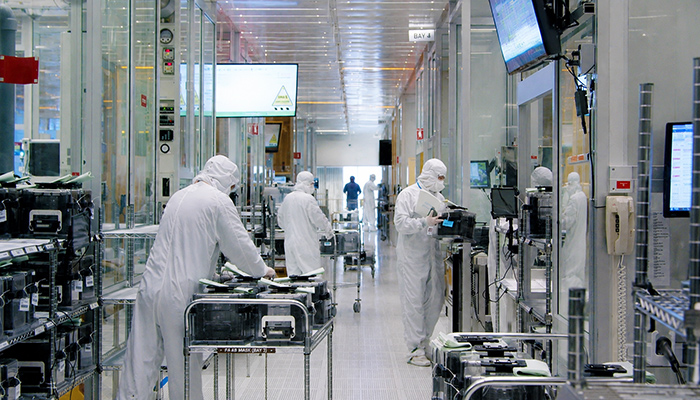
Particle pollution in their clean room is mainly due to personnel activities and material handling. Even through the air shower, particles will continue to be released during the movement. In the manufacturing of wafer fabs, even extremely low concentrations of particles will directly affect the yield and key process stability.
Temperature And Humidity Instability
The temperature and humidity of their clean room are unstable, which directly affects the accuracy of lithographic alignment. If the humidity is too low, the risk of static electricity accumulation increases. Excessive humidity will lead to abnormal moisture absorption and volatilization of materials.
AMC Gaseous Pollution
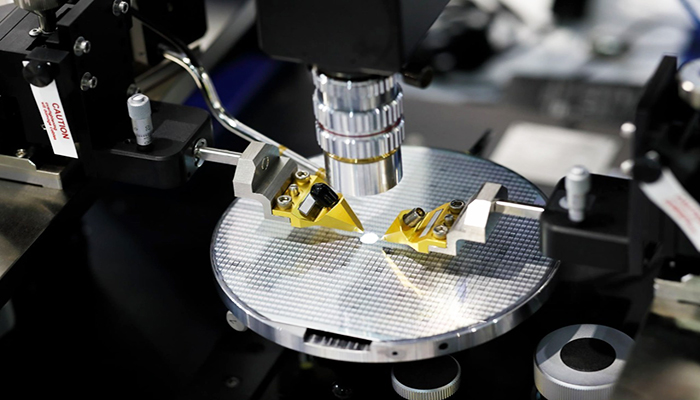
This wafer fab will release harmful gases such as HCL HF, Br2, NH₃ and VOC in the processes of photolithography, etching and thin film deposition, which will directly pollute the clean room environment.
Differential Pressure and Airflow Organization Anomalies
In the clean area of this wafer fab, the pressure difference is unstable and the air flow flows back, which leads to external particles entering the clean area, which directly leads to particle defects on the surface of photoresist and broken lines of etched patterns. This also directly affects the product yield, and finally leads to an increase in cost.
Vibration and Electromagnetic Interference
This American wafer fab customer said that there is vibration and electromagnetic interference in the clean room. This problem is actually not from the ground, but the vibration of the air filter system fan, airflow pulsation and unstable pressure difference causing airflow vibration.
Pollution Carried by Personnel Clothing and Materials
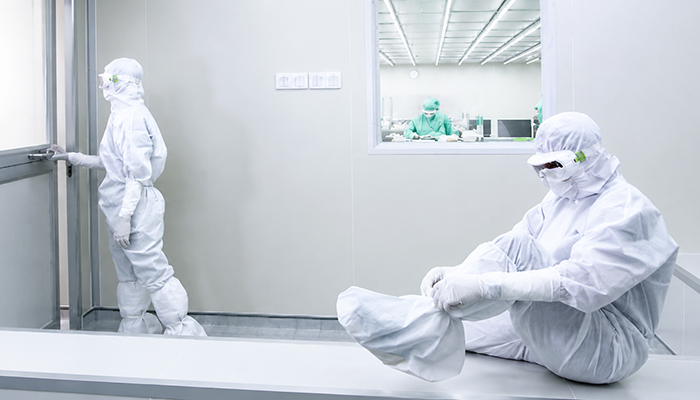
Regarding the pollution carried by people, in addition to the irregular changing process, it is also related to the lax management of the transfer window, and secondly, it is closely related to the untreated pollutants on the surface of materials.
Inadequate Detection
This fab often occurs. If the particle count, pressure difference, temperature and humidity, and filter status are not monitored in real time, problems will occur. It has been found that the pollution exceeds the standard, which has caused losses.
High Energy Consumption and High Running Cost
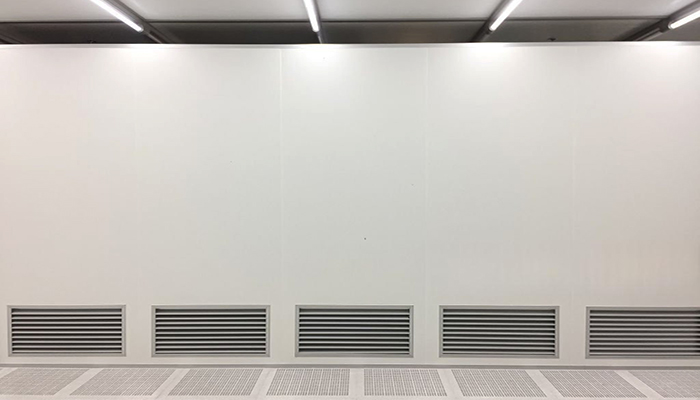
The person in charge of this fab also reflects that the air conditioning and fans in the clean room are in a long-term operation state, which can easily lead to an increase in energy consumption and is also a common energy-saving problem.
The Following Specific Solutions Are Available for This Fab Problem
Problems of Suspended Particles Continuously Exceeding the Standard Caused by Personnel Activities and Handling Materials
The first step is to upgrade the graded filter plate in the air shower room and the changing room, and the air shower air inlet is equipped with G4 pre air filter and F8 medium air filter. The air outlet uses a PTFE-coated silicon-free ULPA ultra-efficient air filter to trap fibers and dust inside the air shower, which reduces the chance of pollutant particles entering the clean room.
A self-circulating FFU unit is installed in the dressing room and buffer room, and when the staff enters the main clean room, the dynamic dust is settled in advance, thus making up for the shortcomings that the dynamic dust cannot be removed before.
The second step is also the core step. The FFU filter screen of the main ceiling is upgraded, and a secondary filtration system is added to the return air outlet.
All ceiling air supply outlets are replaced with silicon-free PTFE coating U16-U17, and the dust can only stay on the PTFE surface, and will not be embedded in the filter material to cause secondary dust removal. They choose 0.1um submicron particle interception. No fiber shedding, no silicon precipitation, avoiding photoresist pollution.
A medium-efficiency filter and micro-return air are installed at the rear end of the ground return air grid, and the dust is intercepted twice before it flows back to the static pressure box, which can directly cut off the direct circulation of moving particles in the clean room and the static pressure box, thus solving the continuous circulating particle pollution.
The third step is to make a local purification module in the material transfer and transfer window
In the material walkway, transfer window and cargo shower, FFU integrated unit and built-in ULPAl particle filter section are added, so as to prevent the dust from continuing to spread to the lithography and etching process area.
The fourth step is to regularly detect POA leakage, regularly detect aerosol leakage on FFU and air filters, and eliminate air leakage and damage problems in advance.
Solution to the Problem of Unstable Temperature and Humidity in Clean Room
The filter cannot control the temperature and humidity, so the fresh air return air filtration structure, airflow design and reasonable layout can be optimized to stabilize air supply and reduce the fluctuation of temperature and humidity.
In the first step, the fresh air system is gradient zoned to stabilize the air conditioning unit load. G4, F7 and F9 air filters are used for gradient filtration to protect the cold section and humidification section of air conditioning, and avoid coil blockage and excessive fluctuation of supply air temperature and humidity.
The second step is to optimize the return air duct filtration. Install filter plate to avoid dust accumulation in return air duct and stabilize air volume, so that humidification and dehumidification of AHU air conditioning system can be kept constant
Step 3: Pair with chemical filter plates. When the temperature is too low, ammonia gas and acid gas are more likely to adhere to the surface, thus aggravating static electricity, reducing gaseous pollution accumulation and reducing static electricity accumulation. At the same time, the temperature laminar airflow can be used to reduce the local dead angle and avoid the uneven humidity at local points.
Step 4: Carry out regional air volume proportion in FFU scheme. Independent return air FFU system is adopted in the lithography area and the etching area, and the supply air volume is controlled separately, so as to reduce the temperature and humidity deviation caused by the mutual interference of air flow in the corridor area. III. AMC Gas Molecular Pollution Control Solution
AMC Gas Molecular Pollution Control Solution
The first step is to put an end to external polluted gas, and install a chemical air filter at the fresh air inlet, which can effectively prevent external AMC pollutants from entering the clean room.
In the second step, AMC filter screen is installed in the return air system. Generally, the processing equipment will continuously release HCL. HF. Bromine gas and volatilize it and then disperse it into the workshop. If a chemical air filter plate is installed in the return air system, it can adsorb and block gaseous pollutants and avoid the accumulation of polluted gases in clean rooms.
The third step is to install an integrated FFU + AMC composite filter on the side of the machine. The composite FFU is made and arranged around the lithography machine and etching machine, which is used to adsorb gaseous pollutants at close distance and prevent AMC from corroding the photoresist and causing wafer pattern defects.
Solution for Unstable Pressure Difference and Backward Flow of Polluted Gas into Clean Area.
The essence of pressure differential instability is caused by air volume imbalance, return air resistance fluctuation, airflow vortex and interlayer negative pressure turbulence. There are four steps to solve this problem:
Step 1: Graded filtration to stabilize wind resistance. Long-term accumulation of dust in the filter will cause the pressure difference to continue to rise, and the air volume of the fan will decrease, resulting in the imbalance of the pressure difference in the clean room.Through G4-F7-ULPA graded filtration, this will share the dust load step by step, delay the life of ULPA and slow down the rising speed of the pressure difference. Keep the air volume of the whole clean room in a balanced state for a long time.
Step 2: Prevent air leakage from the air filter and use a fully covered sealed structure. In this way, the pressure difference caused by insufficient air supply volume can be avoided, and the air backflow caused by polluting the clean room environment can be avoided.
Step 3: A pressure stabilizing filter module is installed in the return air of the static pressure box, and a pressure stabilizing return air filter is installed in the static pressure box and the return air shaft to reduce the airflow vortex and prevent the polluted gas from reversing to the lithography area.
Step 4: Air supply by modules, make a separate set of FFU in the process area with high cleanliness requirements of photolithography and etching, and completely isolate it from other areas, so as to avoid the pressure difference caused by the fluctuation of space air volume.
Solution of Fan Vibration and Electromagnetic Interference Problem
The vibration mainly comes from the operating vibration of FFU fan and airflow pulsation. We start with the improvement of FFU structure to reduce vibration.
Step 1: Vibration reduction FFU-ULPA, at the connection between FFU and air filter, add a rubber ring, suspend the shock absorption frame, and isolate the vibration of the fan from being transmitted to the suspended ceiling. ULPA filters feature a suspension mounting that weakens vibration transmission to the cleanroom.
Step 2: Optimize the wind resistance of the filter, improve the ULPA filter material and the flow channel design, so that the air can pass through the filter more evenly, and further reduce the air vibration.
Step 3: Install static pressure equalizing net. Install a flow equalizing net at the air inlet to disperse turbulent flow, make air advect and reduce airflow fluctuation.
Solutions for Pollutants Carried by Personnel Clothing and Material Transfer
It is necessary to do front interception and improve the configuration of locker room, cargo shower and transfer window.
Step 1: Independent self-circulating FFU is used in the dressing room, and self-circulating FFU purification unit is installed in the dust-free clothing storage room for the first and second changes, so as to capture hair, fiber and dander in time, and reduce the pollution of attachments before personnel enter the workshop.
Step 2: The cargo shower room and transfer window are equipped with independent purification module, and ULPA filtration system is installed. The pollutants and chemical pollutants on the surface of materials can be filtered out by blowing and ULPA. We directly made a complete set of changing clothes and cargo shower product configuration for this American customer, and gave him reasonable management suggestions to help them make up the loopholes
Lack of Real-time Monitoring, Problem Lag Solution
According to this customer’s problem, we integrate differential pressure sensor, particle monitoring module, AMC gas probe, temperature and humidity probe and differential pressure acquisition module into FFU and AHU filter modules to build a set of linkage monitoring system, which can realize digital early warning. The filter replacement time can be predicted in advance, and the pressure difference and abnormal temperature and humidity will be warned in advance.
Solutions to the Problem of Excessive Energy Consumption
First of all, we get the filter, not the higher the filtration level, the better, but the best filter is to choose the right grade and material according to the actual working conditions, so that the filtration can play its maximum role.
Step 1: Our newly developed low-resistance PTFE coated ULPA filter material can directly reduce the energy consumption of the motor by reducing the filtration wind resistance on the premise of ensuring filtration efficiency.
Step 2: Hierarchical filtering. Using G4-F7-F9 pre and medium efficiency air filter can intercept larger particulate matter, reduce the dust accumulation speed of UPLA, and the fan speed will not be affected, which can prolong the service life of air filter and reduce electricity consumption.
Step 3: Set the front filter fence grid in the return air duct to reduce dust accumulation in the return air duct and reduce additional energy consumption.
Project Renovation Results
In view of a series of problems such as particle pollution, AMC gaseous pollution, temperature and humidity fluctuation, abnormal pressure difference, etc. in American wafer fabs, our Filtedeg air filter manufacturer team provided them with product and technical support. It took more than 3 months from inquiry to the landing of their project, and finally achieved obvious results:
- Wafer surface contamination defect rate decreased by about 25%
- 90% reduction in AMC concentration
- Production equipment maintenance cycle extended by 30%
- Clean room temperature and humidity fluctuate at ±0.2℃
- Differential pressure fluctuation within ±2 Pa
- About 40% reduction in filtration system vibration
- Realize 24-hour online monitoring system
- 18% lower overall clean room energy consumption
- Approximately 60% reduction in pollution from people and materials carried
Upon completion of the transformation, customers reported that the wafer yield increased by 1.5%, bringing quantifiable benefits to customers.