
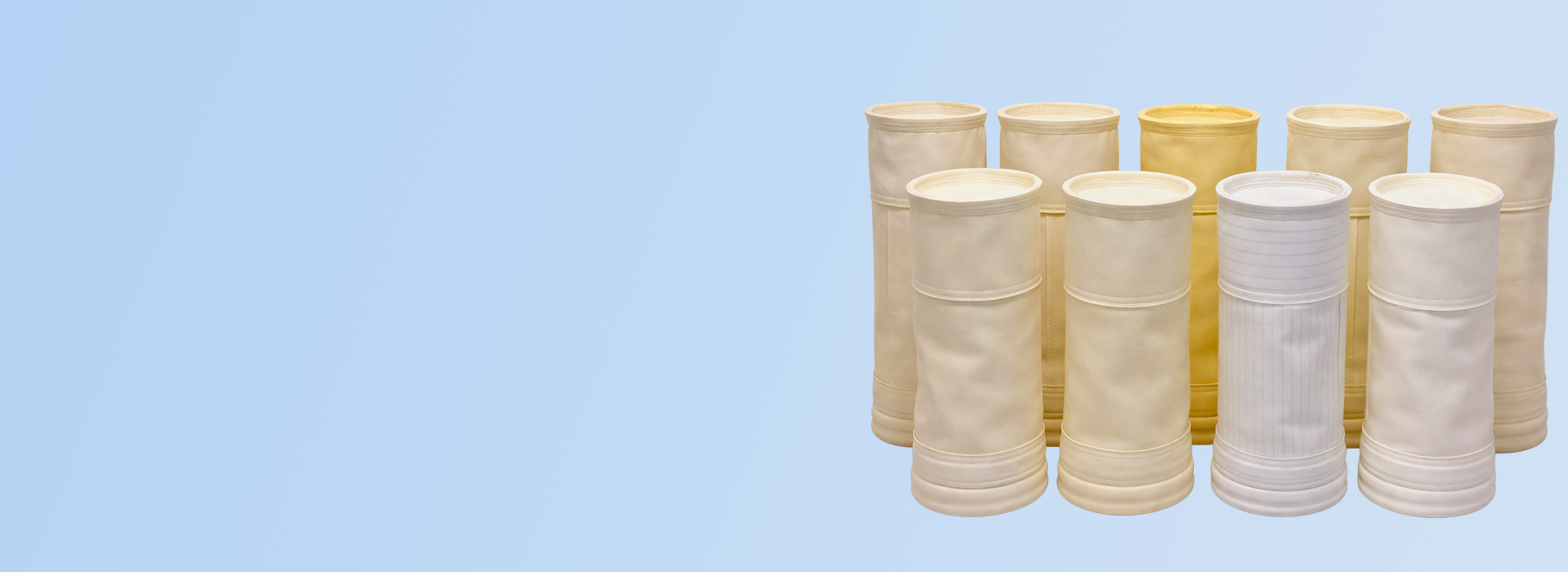
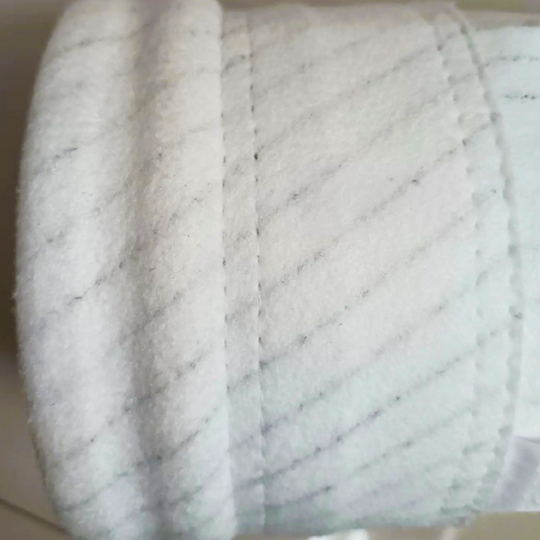
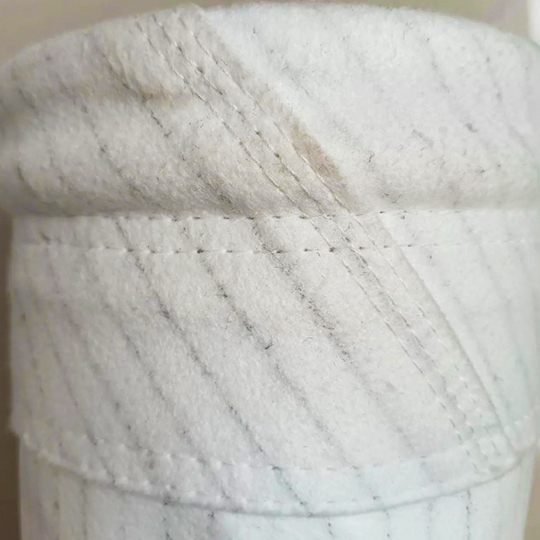
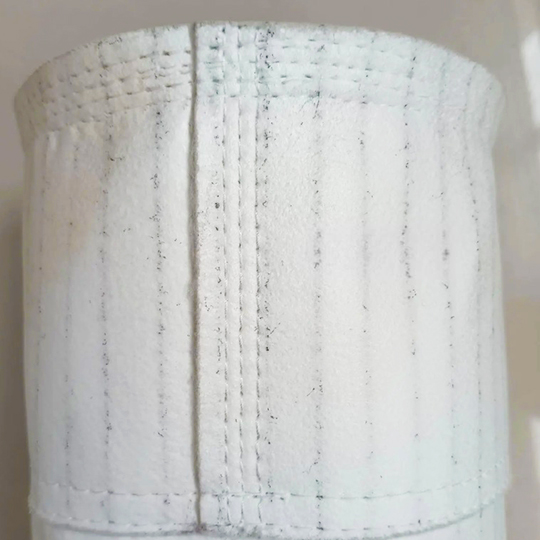
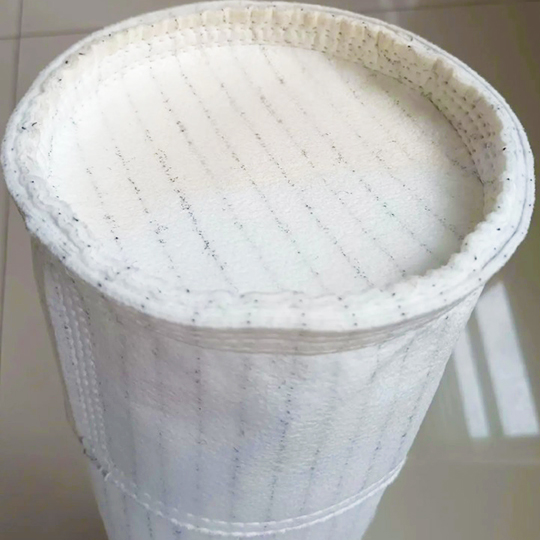
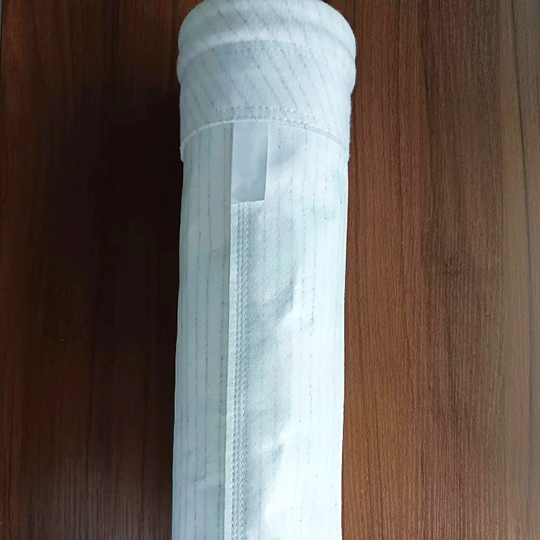
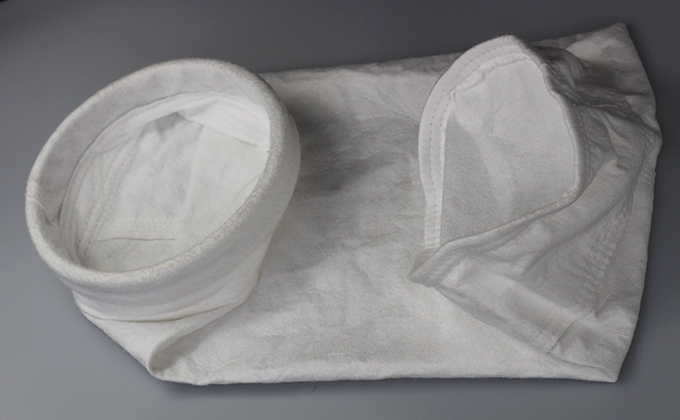
Anti Static Micro Porous ePTFE Membrane Filter Bag
- Flash-fire resistant and anti-electrostatic cake compaction with anti static filter media dual protection
- ePTFE membrane can withstand continuous working temperature of 260℃(500℉), instantaneous up to 300℃(572℉).
- Surface resistance 105-10⁸ Ω, electrostatic half-life ≤ 0.3s, uniform conductivity in all directions.
- Dust stripping rate 95.0%∼99.0%, high air permeability 2-3m3/m2⋅min@125Pa, low resistance, energy consumption reduced by more than 20%.
- Water and oil repellent + anti-condensation, high humidity, chemical corrosion environment.
- Ultra-low emission <5mg/Nm3
- Peeling strength> 10N@15mm, long service life
- Long-term stability of performance, wide range of adaptation
What Is a PTFE Membrane Filter Bag?
PTFE Membrane Filter Bag refers to the composite filter bag with needle felt (e.g. polyester, PPS, glass fiber, etc.) or woven fabric filter material as the substrate, and a layer of expanded polytetrafluoroethylene (ePTFE) micro porous membrane is composited on the surface of the filter substrate through the process of hot pressing or adhesive bonding to utilize the micro porosity to retain/filter ultra-fine dust, thus realizing ultra-low emission and surface layer filtration. It does not clog, clean dust quickly without blurring the bag, stabilize the low pressure drop, save energy and long service life.
PTFE Membrane Filter Bag performance and life depends largely on the quality of ePTFE membrane and lamination process, FiltEdge adopts bi-directional stretching process of ePTFE membrane, and ensures the membrane structure integrity and firmness, does not fall off, batch stabilization, high efficiency and uniform filtration through hot pressing and gluing laminating process.
FiltEdge Typical PTFE Membrane Filter Bags by Filter Medias
Depending on the filtration media, FiltEdge offers a wide range of proven membrane filter bags with varying temperature ranges and chemical resistance to meet the challenges of your complex environment, listed as just a sampling, and can be custom designed and developed to meet specific needs.
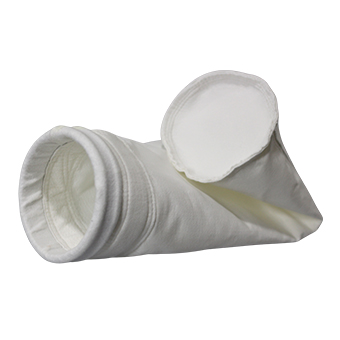
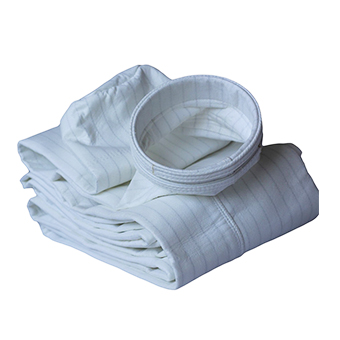
Normal ambient temperature, anti dust flash explosion, such as dry flour, fine resin powder condition
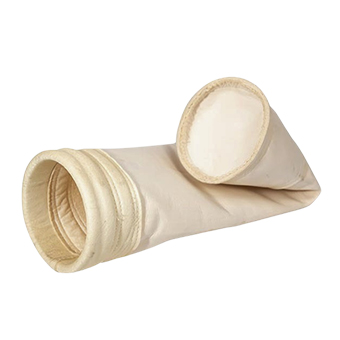
Chemical corrosion, high temperature, such as coal-fired boilers
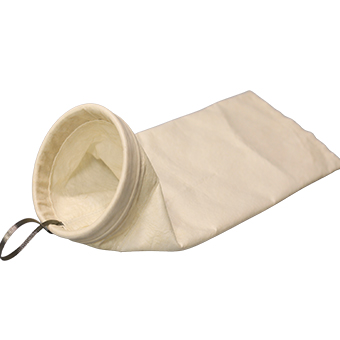
Chemical corrosion, high temperature, ultra-fine dust, easy to stick, easy to flash explosion
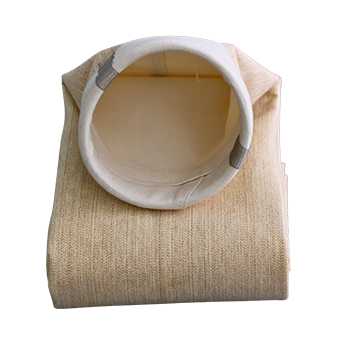
High temperature, oil smoke, such as asphalt mixing, cement kiln end, iron and steel plant flue gas
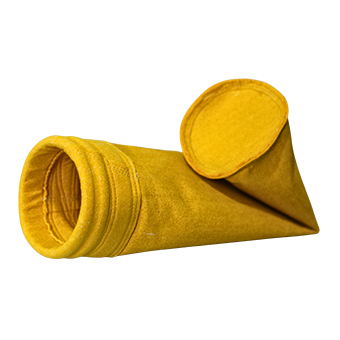
High temperature, high air permeability, such as chemical smelting, collection of fine chemicals.
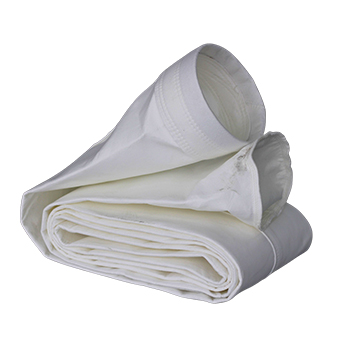
Complex chemical environment, high temperature, such as waste incineration, titanium dioxide production
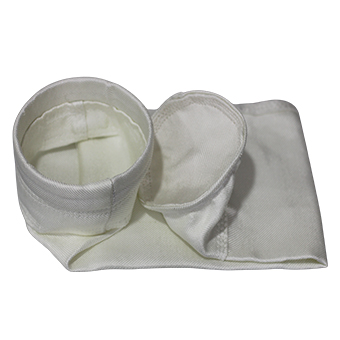
High temperature, moderate cost, such as iron and steel plant coking, cement kiln head, smelting industry
FiltEdge Typical PTFE Membrane Filter Bag by Membrane Types
In addition to basic filtration and hydrophobicity, FiltEdge ePTFE membranes can be processed to be anti-static, oil repellent, or both, to meet the needs of your application.
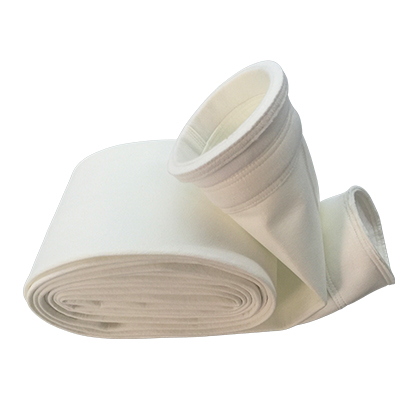
Ultra-low emission, low resistance
Retard water vapor condensation, limited anti-condensation
Conventional fume-free filtration conditions
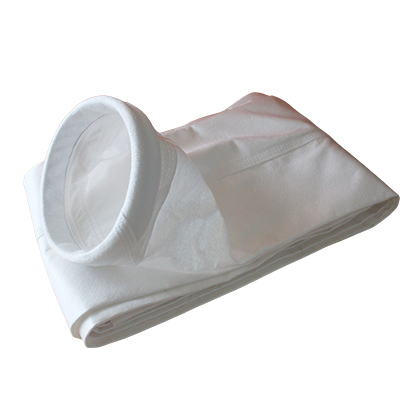 Water and Oil Repellent PTFE Membrane Filter Bags
PTFE membrane is inherently hydrophobic, but requires oil repellant treatment.
Oil mist condition, anti-condensation
Ultra-low emission, low resistance
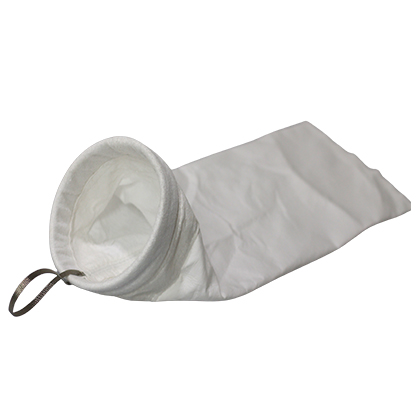 Anti-static PTFE Membrane Filter Bag
Conductive/Anti-static
Anti-flash over/Anti-adsorption cake compaction
Ultra-low emission, stable low resistance operation
Key Features of FiltEdge PTFE Membrane Filter Bags
In addition to the performance of conventional filter bags for ePTFE membrane filter bags, the essential difference is the use of different membranes and lamination processes, resulting in a number of additional effects that are not the same.FiltEdge’s proprietary technology ensures that not only will you have ultra-low emissions, but you will also have the lowest total life cycle costs through safe, stable, and easy operation and maintenance.

Micro pores intercept dust on the surface of the membrane, and the dust does not enter and clog the interior of the filter media.

The dust interception rate can reach over 99.9%, and the emission can be lower than 5mg/Nm3.

Stabilized system differential pressure, 20-30% lower than conventional filter media.

Extremely low surface energy allows dust removal quickly during pulse jet

Membrane is extremely resistant to chemical corrosion.

Bi-directional stretching process ensures the flexibility of the membrane, 300,000 times of high-frequency pulse jet without cracking.

Compatible with a variety of organic/inorganic fibers, woven fabrics/needle felts, and a wide range of temperatures.

High ROI, low emissions, low drag and long service life reduces overall O&M costs.
How Micro Porous PTFE Membrane Forming Technologies Dictate Your Filter Bag Performance
There are two main ways of molding PTFE micro porous membranes, namely, Bi-directional Stretching and Leaching/Wet Process.
Bi-directional Stretching refers to the mixing and processing of PTFE resin and additives in both longitudinal and transversal directions under heating to form a sheet with a structure of nodules and fibers, which utilizes intermediate micro-pores to achieve filtration/retention with high porosity and excellent air permeability.
Wet Process/Leaching is a phase separation pore formation process in which PTFE resin is mixed with a soluble porogenic substance (e.g., specific inorganic salts or polymer particles), and then a solvent or acid is used to dissolve the porogenic substance from the film. The pore size can be very regular, which is suitable for extremely precise requirements on the size of the retained particles. Bi-directional stretching is also generally performed, but the finished membrane is weaker than pure bi-directional stretching in terms of porosity, pore size, uniform pore consistency and strength.
Because pure bi-axially stretching membranes have better dust removal, anti-dusting fatigue properties and longevity, FiltEdge PTFE membrane filter bags are fully utilized in this process to ensure that you are able to consistently achieve ultra-low emissions over time.
Advanced ePTFE Membrane Lamination Methods for Your Filter Bag
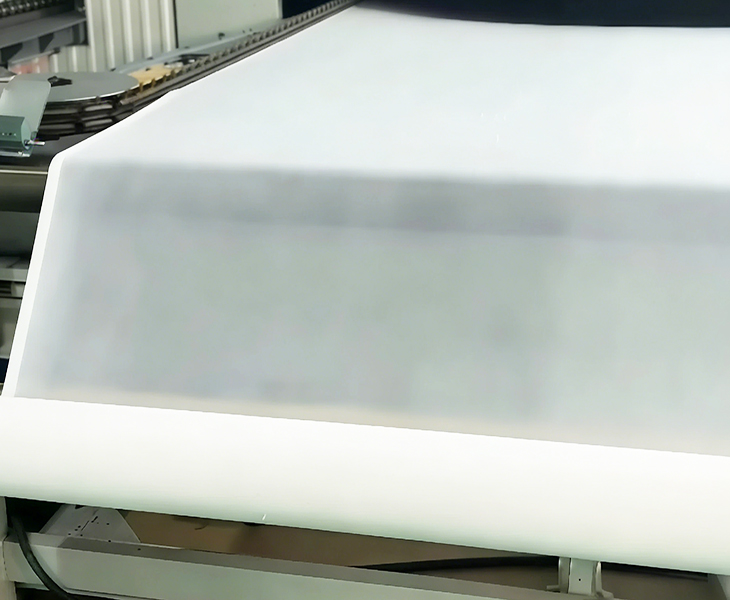
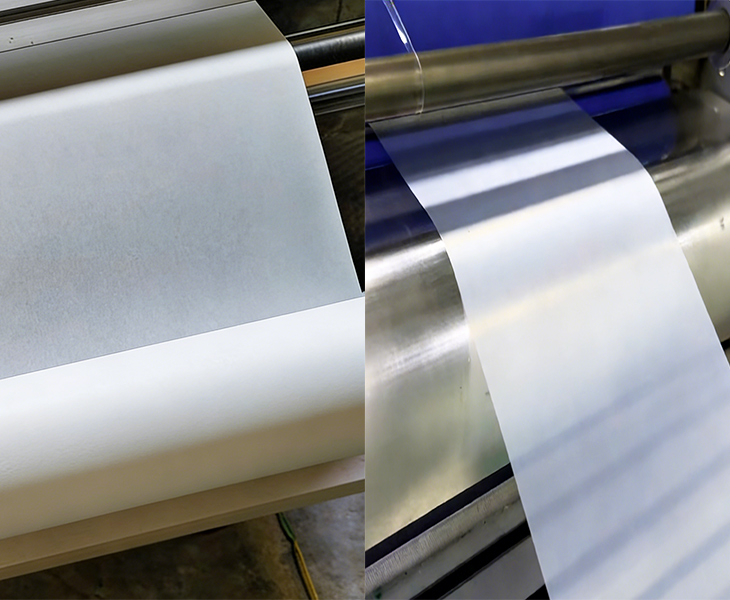
Although the membrane quality is the foundation, but the lamination method, process details and quality control is also crucial.
At present, there are two mainstream membrane lamination processes, hot pressing and adhesive bonding.
For some thermoplastic fiber filter media, such as PET, PPS, etc., the fiber on the filter media surface is melt softening and then bonded with the membrane with appropriate temperature; adhesive boding way is to use specific glue which bond the membrane and filter media, such as aramid, P84, etc., the lower surface energy fibers are need to be pre-treated in advance in order to increase the adhesion, such as fiberglass.
FiltEdge ensures smooth operation and ultra-low emissions in practice cases for customers around the world through continuous improvement and research development of key process challenges such as temperature fluctuation/time control, adhesives and treatment agent formulations.
How to Choose High Quality PTFE Membrane Filter Bags?
You should not judge solely by the flat and smooth appearance , but from four core dimensions: “membrane quality”, “lamination process” , “substrate quality” and “performance in use “to evaluate.
- Uniform Membrane Pore Structure
Uniform microporous structure, pore size 0.2-3 microns
Stable pore size distribution - High Membrane Lamination Strength
Peeling strength > 10N@15mm - High Filtration Efficiency
Typically 99.9%, even higher, emissions up to <5mg/Nm3 - Low Initial Resistance
High porosity (approx. 70-90%) keeps initial resistance low. - Stable Operating Differential Pressure
Long-term operating differential pressure increases slowly, and the operating resistance is lower than that of traditional filter media over 30%. - Good Dust Removal Performance
Low surface energy, contact angle > 120 degrees, non-adhesion, dust release rate should be greater than 99%. - Good Corrosion Resistance
Strong chemical stability - Reliable Substrate Mechanical Strength
Can withstand high-frequency pulse cleaning - Reasonable Matching for Substrate Media and Working Condition
Different working conditions require different substrate medias - Stable Filter Bag Manufacturing Quality
Precise dimensions
Good sewing quality
Good sealing
No needle hole leakage
Can PTFE Membrane Filter Bags Handle Oil Mist or High-Moisture Flue Gas?
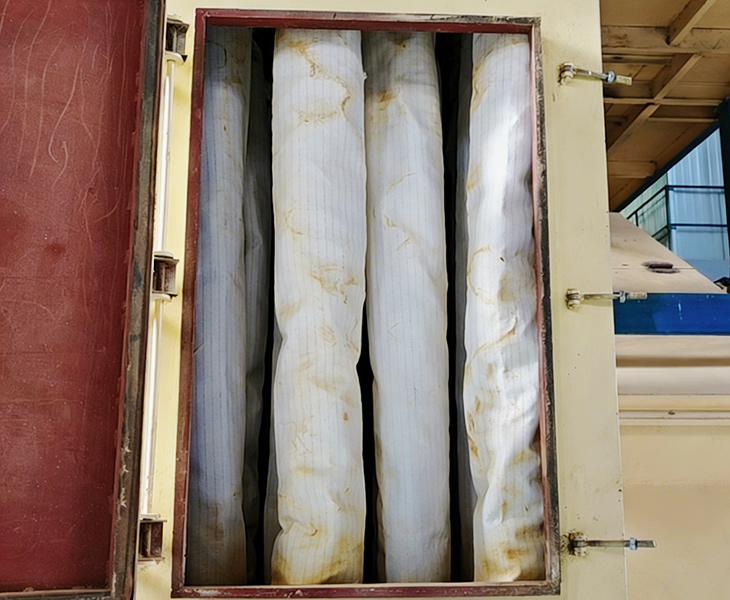
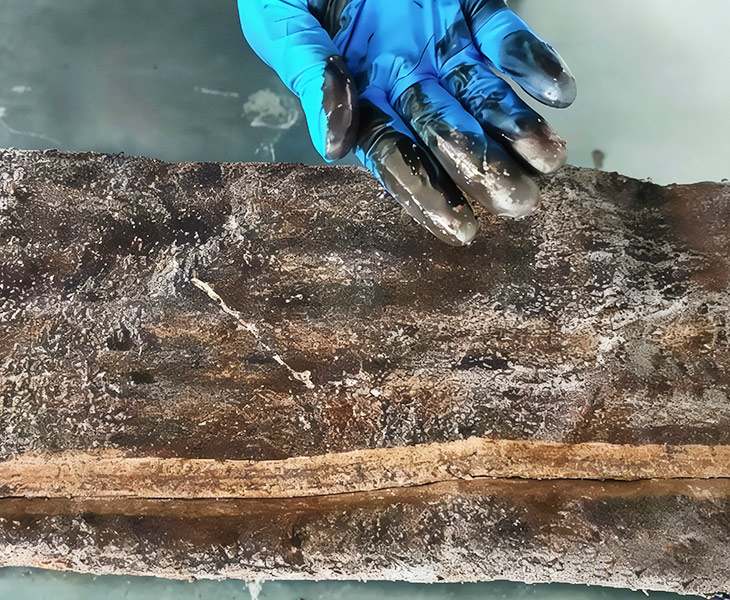
PTFE membranes are naturally hydrophobic and can effectively solve the problem of condensate-induced “bag blinding”.
Untreated membranes can block large-size oil droplets simply, not a true oil-repellent function with only AATCC 1-2, oil droplets will gradually infiltrate the membrane surface to form oil film, easy to paste the membrane’s micro-pores, which can cope with low oil mist, and relative short service life.
If long service life is required, regardless of the amount of oil mist and droplet size, FiltEdge prioritizes the use of PTFE membrane filter bags with both substrate and membrane treated with oil-repellent up to AATCC 6-8, which have lower surface energy, and can maintain a service life of 2-4 years.
Why Choose FiltEdge for High Temperature Filter Bags?
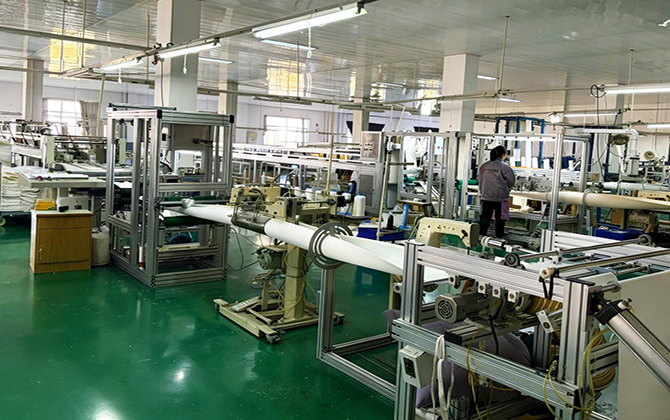
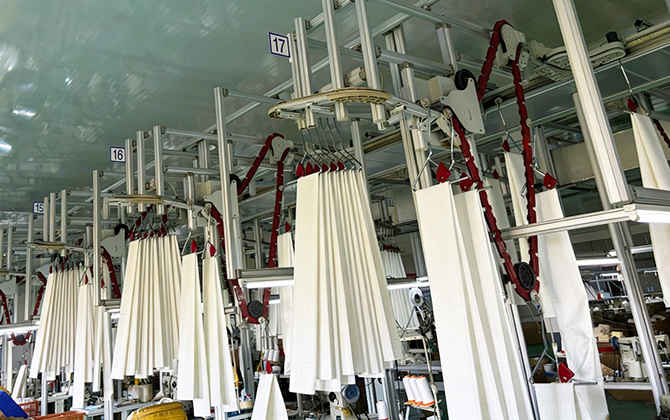
FiltEdge LLC is a U.S. company established in 2025, supported by SFFILTECH in China, established in 2006. Manufacturing support is provided through SFFILTECH in China. Confirm product specifications, available quality documents, pricing and delivery in the quotation. Certificates must be checked for the relevant entity, facility and product. Support is arranged during business hours; any on-site service or warranty terms require separate agreement.
What Is the Difference Between PTFE Membrane Filter Bag and Standard Filter Bag?
The filtration mechanisms of laminated and non-laminated filter bags are completely different, there is no superiority or inferiority, they are just realistic choices for different effects and purposes under different working conditions. FiltEdge adheres to the principle of evaluating the selection of bags for actual working conditions to ensure that you can realize long-lasting and stable filtration effects.
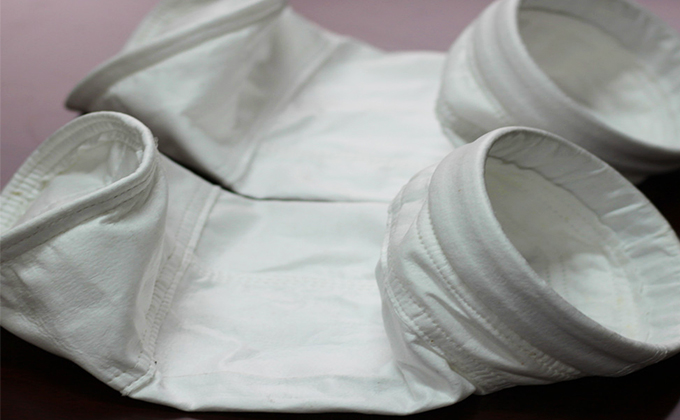
Surface filtration is realized by using micropores as the permeable unit, and dust is retained on the membrane surface, which can realize stable and continuous high-precision filtration and ultra-low emission <5mg/Nm3, and energy consumption is reduced by 20-30%, and the filtration effect and service life are closely related to the quality of the membrane and the membrane lamination process.
Surface dust cake + filter media stable 3D structure to achieve deep filtration, relying on the gaps of dust cake particles and fibers to achieve air permeability, to achieve low stable emissions, good compatibility with the conditions, but easy to clog subject to the conditions, dust removal resistance easily arises, the bag service life may be affected by improper dust removal.
Why Do You Need Conductive Membranes?
In the vast majority of cases, ordinary membrane + conductive substrate is sufficient, but in specific cases conductive membrane is still necessary. Because PTFE membrane is an insulator, although the substrate filter media has already realized the conductive function, but the static electricity may still be accumulated on the surface of the membrane which can not be dissipated. Under the very fine dust, high static electricity, higher safety redundancy needs, conductive membrane can ensure safety, such as coal dust system, plastic powder, resin powder, pharmaceutical powder. At the same time, the dust stripping rate of conductive membrane is also higher than that of ordinary membrane, which can prevent the bag blinding caused by electrostatic adsorption, meaning that with the same cleaning effect, conductive membrane can reduce operating resistance by 200-300 Pa, which directly translates into savings in electricity costs.
Which Type of Anti Static PTFE Membrane Is Best for Your Baghouse?
There are many ways to make PTFE micro porous membranes electrically conductive, including Integrated Mixing, Surface Coating/Dipping, Metal PVD/Sputtering, and CVD, each with its own advantages and disadvantages, however in the case of pulse jet and air reverse dust removal, only Integrated Mixing meets the needs as follows:
Nano Carbon Black
20-50nm conductive carbon black added to PTFE resin stretching membrane, the technology is extremely mature, electric resistance distribution is very uniform, surface resistance of 10⁶-10⁸ Ω, 100,000 times pulse attenuation of 15-30%, to meet the 200,000 times use, half-life of 0.2-1 seconds, wear resistance enhancement, moderate cost, the membrane will become brittle if not controlled well, stretching multiplier is limited, which is the current mainstream way.
Carbon Nanotube
Utilizing its high conductivity, a small amount of addition to complete the perfect conductive pathway, maintaining high permeability and strong tensile strength, surface resistance 105-107 Ω, the attenuation <15% after 100,000 times dust cleaning , to meet the 500,000 times use, the half-life of 0.05-0.2 seconds, suitable for high A/C velocity, high static dissipation and high safety redundancy requirements. The cost is high.
Graphene
Conductivity is better than carbon nanotube, surface resistance 104-106 Ω, half-life <0.05 seconds, less additive amount to make a thinner, more breathable membrane, its lamellar structure play a reinforcing role at the same time, and the membrane surface is smoother, so that the resistance is lower, easier to clean, but large-scale homogeneous dispersion of the mixing is the difficulty, the cost is very high, is applied in the extreme working conditions and cutting-edge areas currently.
FiltEdge selects carbon black and carbon nanotube technology according to the actual working conditions, adjusts the amount of conductive substances added, perfectly solves the dispersion problem, balances the contradiction between performance and cost, achieve better results, and actively explores graphene conductive membrane technology.
Ultra-low emissions
Solve dust removal problems and reduce adhesion
Reduces resistance and pressure drop, thus realizing energy saving.
High humidity and oil mist working condition, preventing bag blinding.
The smooth surface of PTFE membrane makes the dust not easy to adhere, the tiny pore size makes the dust not easy to penetrate and block to realize surface filtration, the high porosity realizes the high air permeability, reduces the operation resistance/differential pressure, and directly reduces the energy consumption of air compressor and induced draft fan by 20-30%.
ePTFEm membrane pore size of 0.2-3 microns, can be adjusted according to the condition needs, can be stable and continuous to completely block the dust outside the membrane, preventing it from penetrating embedded in the substrate, to achieve <5mg / Nm3 emissions.
Whether it is woven fabric or needle felt, the substrate pore size is larger, the filter bag without membrane mainly relies on the dust cake to achieve filtration accuracy, part of the dust will penetrate the substrate and thus lead to higher emissions.
This depends on the quality of the membrane and the peel strength to the substrate.
Pulse jet cleaning causes continuous fatigue and mechanical damage to the filter bag, abrasive dust, high temperatures and chemical corrosion accelerate this process, and poor quality membranes and improper lamination processes can cause the membrane to break down or peel away from the substrate.
FiltEdge’s bi-directional stretching and high-temperature shaping process greatly improves the strength of the membrane, and the high-temperature heat pressing and unique adhesive make it possible to maintain a stable bond between the membrane and the substrate over time, even in high-temperature corrosive environments.
Simple spraying of additives on the membrane surface can only maintain the efficacy for a short period of time, and it may also block a large number of micropores on the membrane, with rising resistance, increased energy consumption and premature failure.
The most common way is to impregnate the substrate water and oil repellent treatment, drying and heating set and then laminated with conventional ePTFE membrane, the effect is better than the untreated bags, even if some of the liquid droplets and moisture penetrate the membrane layer, it is not easy to coalesce and condense in the substrate so as to damage the membrane layer reversely.
FiltEdge blends special low surface energy modifying additives to make ePTFE membrane oil repellent before film formation, or uses vacuum plasma deposition or vapor deposition technology to change the surface properties of PTFE at the molecular level after film formation to ensure that the membrane micro pores are still open without affecting air permeability. Meanwhile the the substrate is applied water and oil repellent treatment, and then laminated together to achieve the highest level of overall water and oil repellent function, able to cope with harsh high oil mist working conditions, to ensure the long-term stability of use.
PTFE membrane filter bag resistance rise indicates that the surface filtration mechanism fails, turned into a deep blockage and physical sealing, specific multifaceted reasons are as follows:
- membrane pore size is too large (more than 3 microns), dust penetrates the membrane layer into the substrate, the formation of blockage;
- Membrane breakage or fall off, dust directly into the substrate, blockage occurs;
- The flue gas temperature is lower than the acid dew point, bag blinding caused by condensation;
- The substrate is not treated with water and oil repellency, oil droplets penetrate into the substrate through capillary action, and the dust adheres to the fibers;
- The pulse jet pressure is too low to clean the dust in time and in sufficient quantity;
- Too high pulse jet pressure and frequency cause very fine dust to be squeezed into the membrane holes, blocking the membrane and substrate;
- High filter air velocity, which causes dust to cling to the membrane surface and reduces the self-cleaning and dust removal capability.
FiltEdge controls the quality of the membrane from the source, through reliable lamination process and advanced post-treatment additives, technical diagnosis, your application oriented selection and operation guidance, to ensure that you have no worries.