

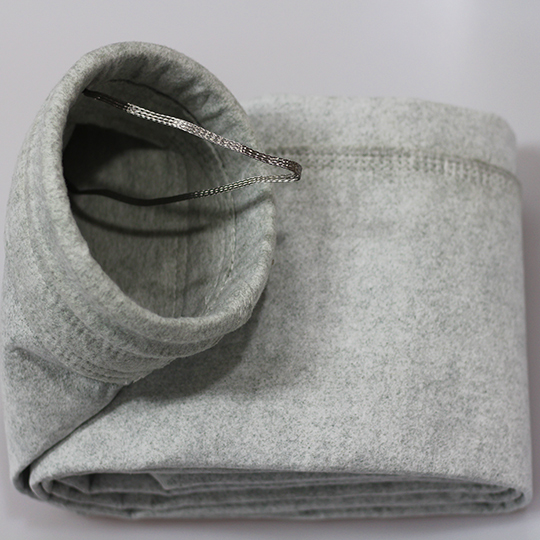
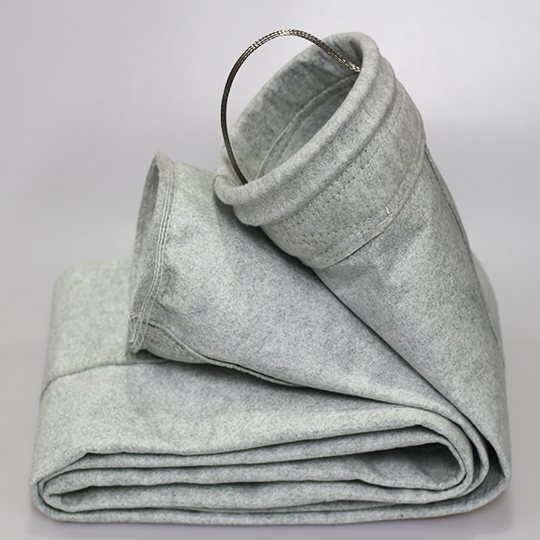
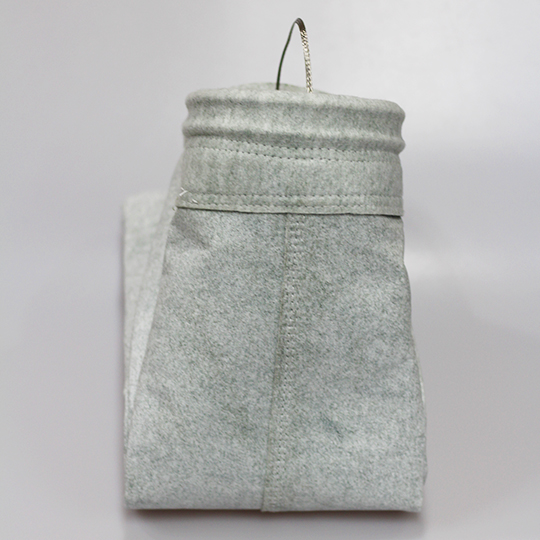
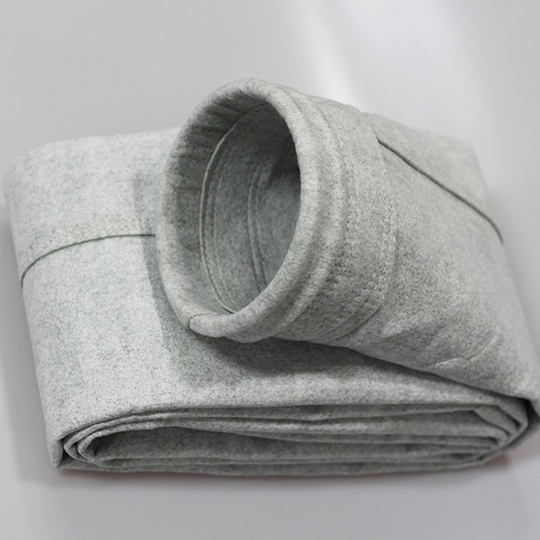
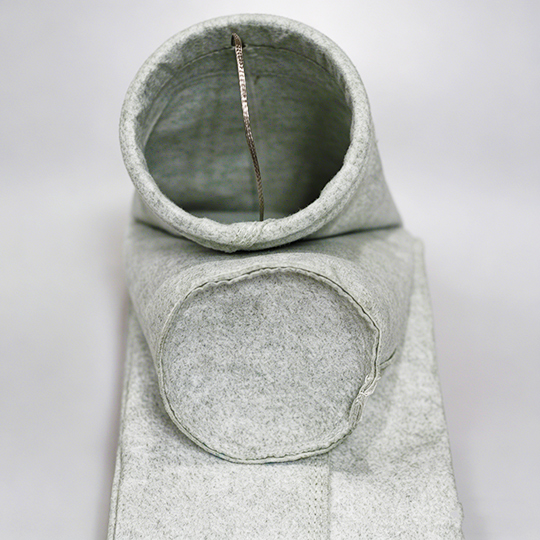
Polyester Needled Felt Blended with Carbon Fiber Anti Static Filter Bag
- Highly rated against flash explosion and high electrostatic adsorption
- Continuous working temperature 130℃(266℉), instantaneous up to 150℃(302℉)
- Surface resistance 10⁶-10⁸ Ω, electrostatic half-life ≤ 0.3s
- Long-term stable performance, uniform conductivity in all directions
- Native polyester fiber, quality assurance
- Low emission <30mg/Nm3 (ePTFE coating <5mg/Nm3)
- Wide range of operating environments, adaptable to various ash cleaning methods (low humidity RH<30% and high abrasiveness are not suitable)
- Medium price, best choice for most ambient environments.
What Is a Anti Static Filter Bag?
Anti-static filter bags incorporate conductive fibers or a conductive layer to help dissipate accumulated charge when correctly installed and grounded. They do not by themselves prevent a dust or gas explosion. Selection requires review of the complete dust-collection system, operating conditions and applicable test documentation. Surface resistance, volume resistance and charge-decay measurements should be confirmed for the selected construction.
FiltEdge Typical Anti Static Filter Bags by Filter Medias
By type of filter media, by combining conductive media such as carbon fibers, stainless steel fibers, and carbon black/graphite powders in different ways with conventional filter media, FiltEdge offers proven bags with different charge dissipation requirements in a wide range of temperatures and levels of chemical resistance, to meet your complex environmental challenges, as listed below and customized to meet your specific needs.
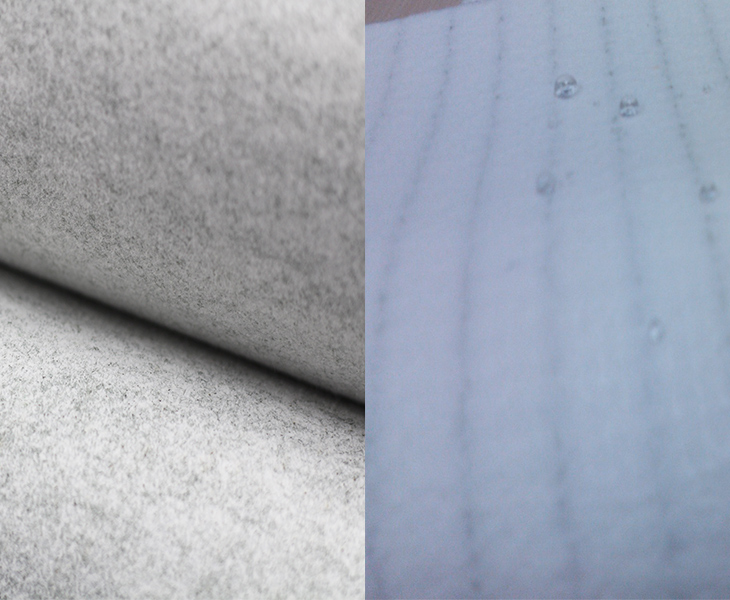
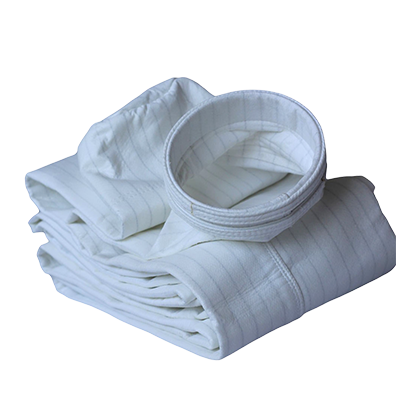 Polyester Striped Needled Felt Anti-Static Filter Bag
Most commonly used and economically priced in low risk environments such as food/grain processing
Average static dissipation rate, surface resistance 109 Ω, FiltEdge up to 108 Ω for increased safety redundancy
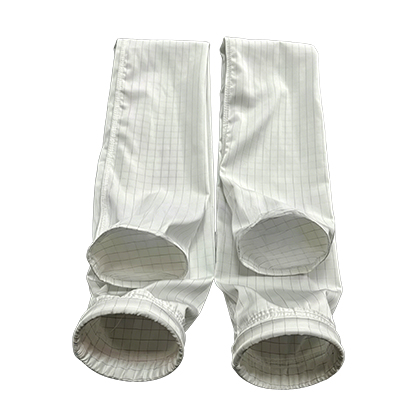 Polyester Grid Needled Felt Anti-Static Filter Bag
Ultra-clean environments for semiconductors, pharmaceuticals, etc.
Optimized cross-grid conductive network for increased safety
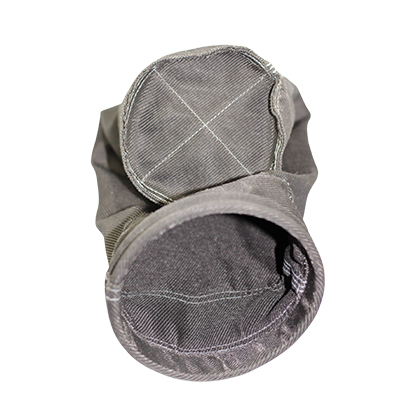 Graphite-Treated Fiberglass Woven Fabric Filter Bag
Ferroalloy smelting (silicon-sanganese furnace), carbon black plant exhaust gas treatment
Prevents high temperature flammable fumes/dust from being ignited by electrostatic sparks
FiltEdge Typical Conductive Structure Designs for Anti Static Filter Bags
Through the universal conductive structure design, FiltEdge can not only ensure that the conductive value of the standard, and at the same time on the basis of the optimization of conductive yarn spacing, conductive fiber content, conductive additives, such as the formulation of means, the special multi-process stacked composite technology to achieve lower resistance and faster static dissipation speed, improve the safety of the redundancy, and to achieve a better anti-explosion and anti-slatting effect.
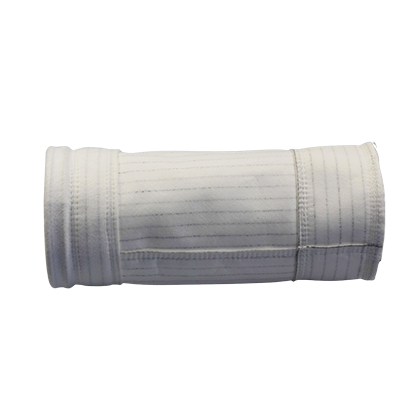 Stripe Type
General low-risk, cost-sensitive areas such as grain storage
Stripe spacing <15mm, one-dimensional directional conductivity, ensures compliance with 109 Ω static dissipation, FiltEdge achieves 10⁸ Ω for increased safety redundancy
Limited conductivity uniformity
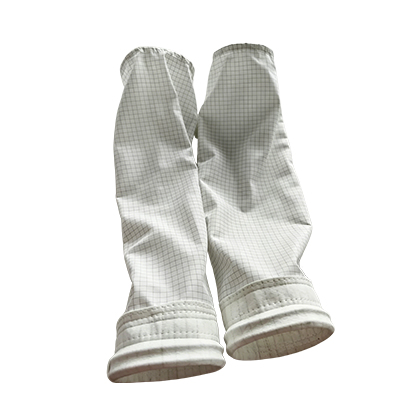 Grid Type
Semiconductor, pharmaceuticals and other ultra-clean environments, fewer applications
Optimized type of stripe, two-dimensional conductivity, improved conductivity isotropic uniformity
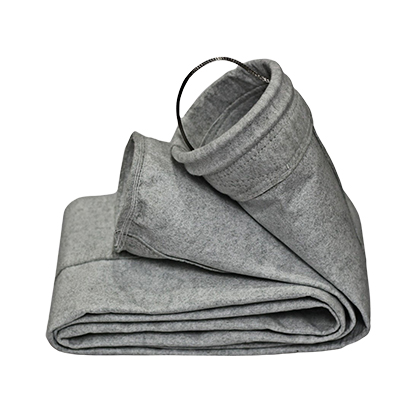 Blending Type
Coal chemical industry, flour milling and other high-explosive risk areas
Mixed into 2-5% of the carbon fiber or stainless steel fiber to ensure durable and stable isotropic uniform high static dissipation effect, 3-dimensional three-dimensional conductivity, resistance of 103-10⁸ Ω, the proportion of conductive fibers for special conditions higher than 5%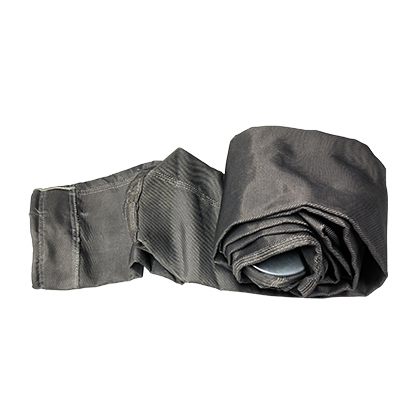 Impregnation/Coating
Mainly used in glass fiber woven fabrics, coating one-dimensional conductive, impregnated three-dimensional conductive.
Graphite treatment 107-109 Ω, both better lubrication effect, more mainstreamCarbon black treatment 105-107 Ω, better conductive effect, easy to fall off
Key Features of FiltEdge Anti Static Filter Bags
Anti-static filter bags are fundamentally different from other filter bags, not only with process filtration or dust removal, but more importantly, safety and security, the performance of the little difference in the results may not be a gap of 1 and 100, but a world of difference between 0 and 1. FiltEdge ensures that not only are you compliant with the emissions, but you can also be safe, stable and easy to operate and maintain, to achieve the lowest whole life cycle cost.

Filtedge anti-static technology is compatible with all conventional filter bags up to a maximum long-term operating temperature of 600°C (1112°F) and an peak temperature of 1000°C (1832°F).

Up to 109/1s, regular supply 106-108/0.3-0.5s, high-risk professional grade 105/0.1s, customizable lower

Low fluctuation of antistatic effect and long-term stability under design working conditions

Competent in conventional chemical corrosive environments

Low emissions <30mg/Nm3 conventional, <5mg/Nm3 ultra-low emissions on demand

Achieves low resistance and high permeability, reduces energy consumption and extends service life, and <20mg/Nm3 emissions without membrane lamination.

In order to ensure that the ePTFE membrane does not become a conductive bottleneck, the bag top is made of the same material without membrane, and the integration of folding and conductive sewing thread is not recommended.

Improve the conductivity level and stability through the composite use of a variety of anti-static technology, with the filter bag and bag cage design/processing to achieve the optimal static dissipation effect.
FiltEdge Anti Static Filter Bags by Different Conductive Media
Depending on the conductive medium, FiltEdge offers the following types of filter bags:
- Conductive Carbon Fiber
Conductive carbon fiber can be stable to withstand the normal temperature, chemically inert, not resistant to high temperature and oxygen-rich, easy to oxidize; not wear-resistant, not folding, not adapt to frequent high-pressure blowing, easy to break into fine dust affecting the effect of anti-static, may be unsuitable for the food/pharmaceutical industry. It can be processed into stripe or grid conductive base cloth in the form of yarn, and can also be blended and processed. - Stainless Steel Fiber
Adapt to most of the chemical corrosion environment, high temperature resistance, oxygen-rich, wear-resistant and folding, conductive effect is better than carbon fiber, adapt to most of the working conditions, can be processed into stripe or grid conductive base cloth in the form of yarn, can also be blended and processed. - Graphite/Carbon Black
Generally used in glass fiber woven fabrics, impregnated or coated with other additives.
Carbon black has excellent conductive effect, but it is easy to fall off, resulting in long-term attenuation, and falling dust may affect the use of some industries.
Graphite has lubrication + conductive double effect, high bonding strength, but the conductive effect is general, high conductive demand industry is not suitable.
How Do You Count a Good Anti Static Filter Bag?
Judge the advantages and disadvantages of anti-static filter bags, in addition to meet the most basic conventional filter bag filtration function, the most central is the anti-static advantages and disadvantages; can not just look at its conductive or not conductive, but look at it in the complex conditions of conductive stability and safety redundancy.
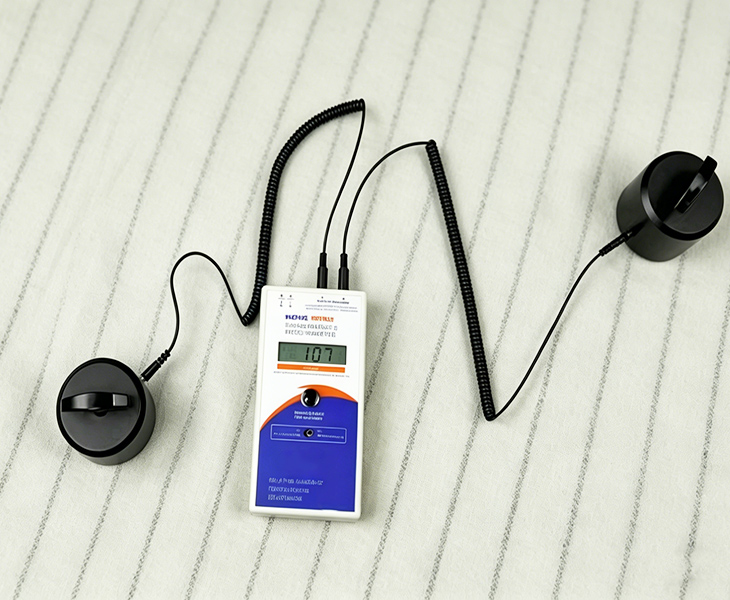
Generally we believe that the resistance of 105-109 for the qualified range, too high or too low will produce harm. Too high resistance is easy to charge aggregation can not be quickly dissipated, the breakdown of air sparks; resistance is too low on the formation of “quasi-conductor”, easy to short-circuit, leakage, overload fire.
Resistance must also maintain the uniformity of all directions does not produce localized power accumulation, small half-life (1s, preferably <0.5s) to ensure that the charge disappears instantly, the performance of lasting resistance to 100,000 pulse blowing, stable and reliable, fluctuations are small.
FiltEdge strictly control the process and quality control procedures, and strive to control the resistance in the 106-108 optimal range, half-life <0.3s, not only to meet the filtration function, but also long-term stability to provide maximum security.
Why Choose FiltEdge for Anti Static Filter Bags?
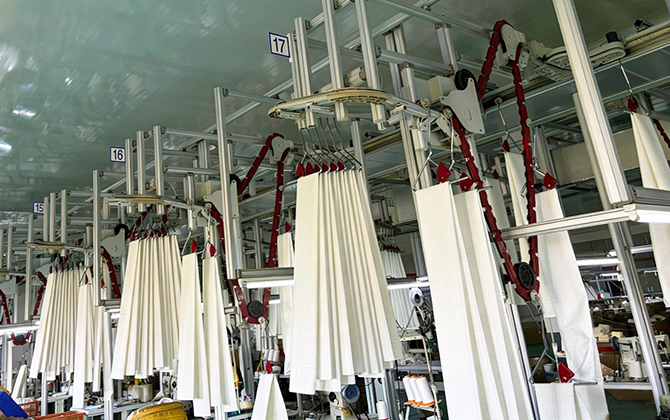
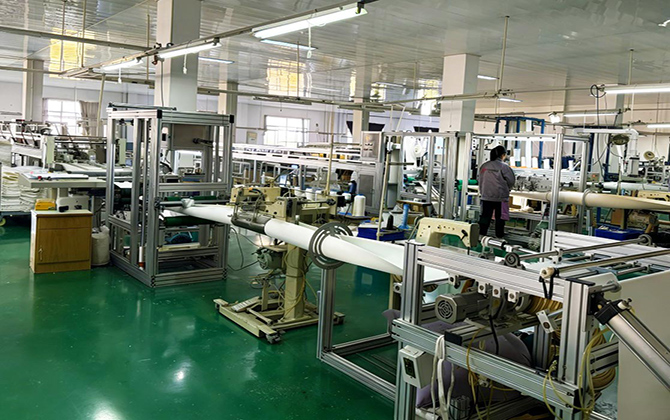
FiltEdge LLC is a U.S. company established in 2025, supported by SFFILTECH in China, established in 2006. Manufacturing support is provided through SFFILTECH in China. Confirm product specifications, available quality documents, pricing and delivery in the quotation. Certificates must be checked for the relevant entity, facility and product. Support is arranged during business hours; any on-site service or warranty terms require separate agreement.
How Do Temperature and Humidity Affect the Performance of Anti Static Filter Bags?
In actual working conditions both temperature and humidity have a great influence on the antistatic properties of the filter bag and do not exist independently, but interact with each other.
- Temperature mainly affects the long-term resistance stability of the filter bag.
High temperatures accelerate the oxidation reaction, especially in oxygen-rich environments, where the carbon fibers gradually become thinner, the resistance rises sharply, and the electrical conductivity decreases.
Due to the conductive fibers and filter bag substrate fibers with different coefficients of thermal expansion, frequent temperature fluctuations will lead to conductive network to produce a small fracture, the conductive properties decline.
High temperature will shorten the “functional life” of the anti-static filter bag. - Humidity primarily affects the instantaneous charge relief efficiency of the filter bag.
High humidity reduces the surface resistance of the filter media and aids in charge migration. However, high humidity can cause condensation, mud clogging of the filter media void, impregnated/coated conductive particles spacing, the conductive performance falling.
At the same time, high humidity also promotes charge release via air ions, which improves the anti-static effect.
Too dry low humidity (<30%) tends to lead to static buildup.
Moderate humidity is favorable, too high or too low will reduce the anti-explosion function.
So proper use of an anti-static filter bag is a systematic project, although sometimes the filter bag still looks very good with normal filtration function, but its “functional life” anti-static has been greatly attenuated unsuitable for use.FiltEdge suggests that the resistance value of the regular check in order to prevent the failure of the filter bag.
In scenarios where anti-static filter bags are used in baghouse dust collectors, the mechanism for generating electrostatic charges involves multiple physical processes, primarily arising from the interaction of dust movement and contact separation, as described below:
- Charge Separation Due to Dust Movement
Stripping Charge – Charge transfer due to the rapid separation of dust and filter fibers when cleaning;
Sedimentation Charging – Dust gravity settling forms a potential difference between the two ends of the fall path, causing the dust particles to carry an electric charge;
Charged Impulse – The dust particles flowing at high speed in the pipeline and the friction with gas molecules produce a “impulse current” similar to that of liquid, which charges the dust. - The Accumulation of Static Electricity Triggered by Mechanical Action
Friction – The dust particles rubbing against each other, the dust collector pipe and the surface of the filter bag continuously, which leads to the transfer of electrons and becomes electrically charged;
Charged by Collision – when the dust hits the metal pipe wall or filter bag skeleton, the instant contact – separation triggers the electron jump, resulting in charge transfer.
FiltEdge deeply understands the causes and mechanisms of static electricity, and develops anti-static technology to guide the selection and application of filter bags according to your actual working conditions to ensure long-term stability and safe and effective use.
In the conventional filter bag top processing, the independent body and top of the bag are connected through sewing. But this poses a problem for anti-static membrane filter bags , as the ePTFE membrane is an insulator, it isolates the top from the body or the top from the plate, so we need to “remove membrane” for the op of the anti-static membrane filter media or use the same media directly without membrane.
FiltEdge recommends and uses this process because it solves the problem very well and guarantees long term stability, but at the cost of a more laborious and time-consuming process.
In order to overcome non-conductive issue between the anti-static membrane filter bag top and bag body or plate , in addition to the “membrane removal” processing, there is a process is to give due consideration to lengthening the bag body, and then directly flap bag and sewing bag top, the operation is relatively simple, but due to the natural inconsistencies in the diameter of the bag body and bag top, folded bag top is prone to produce stacking, squeezing and the transition is not smooth, which makes the filter media itself and the membrane stress concentration, resulting in membrane or conductive fiber fracture affecting the filtration accuracy or conductivity.
FiltEdge does not recommend this process.
FiltEdge generally does not recommend this process.
In addition to the main designed purpose of anti-static filter bag for explosion-proof, there is another important function is to prevent adsorption of slate, improve the use of filter bags and extend the service life. Through the conductive design of the rapid release of electrostatic accumulation of dust charge, thus making the dust is not easy agglomeration on the surface of the filter bag , dust removal becomes easy.
FiltEdge also provides water and oil repellent or membrane treatment to the filter bag, which further avoids the probability of wet dust agglomeration or dust embedding inside.
Overall, the FiltEdge anti-static filter bag eliminates electrostatic adsorption through the conductive network, the hydrophobic surface blocks droplet coagulation of dust, and the micro porous structure reduces mechanical embedding. The triple action inhibits dust agglomeration at the source. Under the FiltEdge technical guidance, combined with scientific dust cleaning management, it can guarantee your long-term and efficient operation of the dust removal system.
This means that a metal wire is used at the top or bottom of the bag to connect the bag body to the plate or the bottom of your dust collector to achieve a quick release of static electricity.
In most cases this is not necessary.
The anti-static filter bag itself is electrically conductive and is in such close contact with the bag cage and the plate/dust collector that the charge can be quickly discharged.
Only if the bag is too long and the dust and gas are absolutely sticky, flammable and explosive in nature, requiring the highest level of rapid conductivity to provide maximum safety redundancy, a metal wire connected to your dust collector body can be considered.
Of course it will.
As the surface material is insulating, non-conductive, so the coating and powder coated bag cage is also non-conductive, creating a potential difference between the filter bag and bag cage. In order to avoid static buildup, some people adopt point conductive way by connecting the top of the bag cage and plate via conductive wire, or not coating the venturi edge under not strong corrosive condition, but this defeats the purpose of the bag cage anti-corrosive, and pose a risk, is not recommended.
FiltEdge recommends considering the use of galvanized bag cage or stainless steel bag cage as an alternative, if you have to use the coating or powder coated process, we will directly use conductive silicone, conductive epoxy resin or conductive polyester to achieve bag cage surface conductive.
Due to the characteristics of antistatic fibers and additives itself, they will generally aging and fracture before filter bag body fiber under chemical corrosion, oxygen, water vapor, dust erosion and frequent cleaning , although it can continue to play a filter function, but the conductive function has been seriously damaged, it must be systematic monitoring and management.
- Dynamic Monitoring
Grounding System Testing – Measure the resistance value of between dust collector grounding terminal and the filter bag or bag cage every month to ensure that it is <4Ω to avoid the risk of sparks caused by static electricity buildup.
Surface Resistance Calibration – Check the filter bag with a surface resistance meter every month to control the resistance in the effective range of 106-109Ω.
- Optimization of Dust Cleaning Process
Pre-coating of new filter bags before commissioning.
Maintaining the dust gas temperature above the dew point temperature of 15°C (59°F) at all times.
Optimize and balance pulse jet pressure, frequency and cleaning duration to maintain proper dust cake. - System Maintenance
Maintain system pressure drop <1500Pa, ideally 800-1200Pa.
Replacement of individual filter bags in case of single point failure.
In simple terms, conductive filter bags are an enhanced version of anti-static filter bags. While they are typically classified as one category in industrial standards, the two concepts are often used interchangeably in practical industry applications and descriptions. However, there exists a significant “order of magnitude” difference in their physical properties and application scenarios. The core distinctions between the two are briefly outlined below (across different standard systems):
Simply put, the conductive filter bag is a strengthened version of the anti-static filter bag, they are usually categorized as a class in the industry standards, actual use and description of the two concepts are often mixed in the industry, but there are obvious “order of magnitude” distinction in the physical properties and application scenarios, the two core differences briefly refer to the following (different standard systems):
- Anti-static Filter Bag
Surface resistivity 10⁶~10⁹ Ω, half-life <0.1s, triboelectric charge density <7μC/m², triboelectric potential ≤500V, recommended grounding resistance ≤10Ω. Delays charge accumulation and controls charge, allowing static electricity to dissipate slowly.
Suitable for: coal powder, plastic powder, sawdust, and grain processing. - Conductive Filter Bag
Surface resistivity < 10⁵ Ω, half-life < 1 s, triboelectric charge density < 0.1 μC/m², triboelectric potential ≤ 100 V, grounding resistance ≤ 4 Ω (dual-loop redundancy), active charge discharge, charge transfer, allowing charge to pass through instantly without obstruction.
Applications: Aluminum powder, magnesium powder, fine chemical solvent recovery, hydrogen environments.
To minimize risks and maximize safety, FiltEdge not only designs and optimizes the development of various levels of anti-static filter media, but also insists on selecting materials based on actual working conditions and anti-static parameters.