
Filter Bag Cage Selection and Inspection
A filter bag cage supports the bag and helps maintain clearance during filtration and cleaning. Cage diameter, length, wire layout, joints and surface condition must match the bag and dust collector.
Materials and Surface Treatment
Carbon steel, galvanized steel and stainless steel are used for different combinations of temperature, moisture and corrosion. Coatings may be considered for selected environments, but suitability depends on gas chemistry, dew point, abrasion and the specified operating conditions.
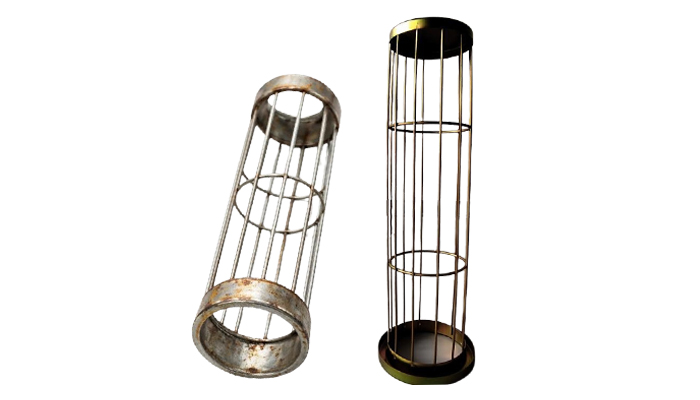
Shape and Construction
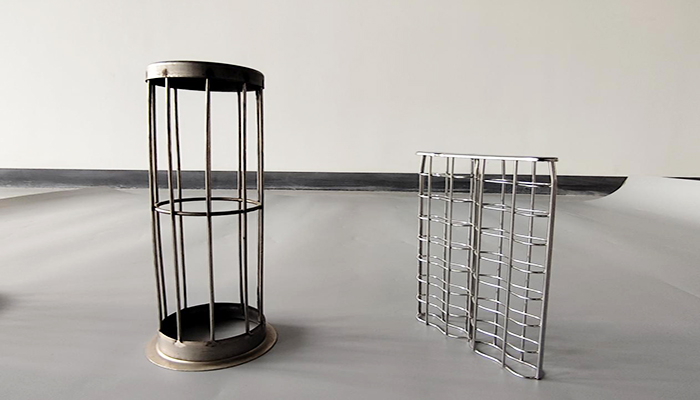
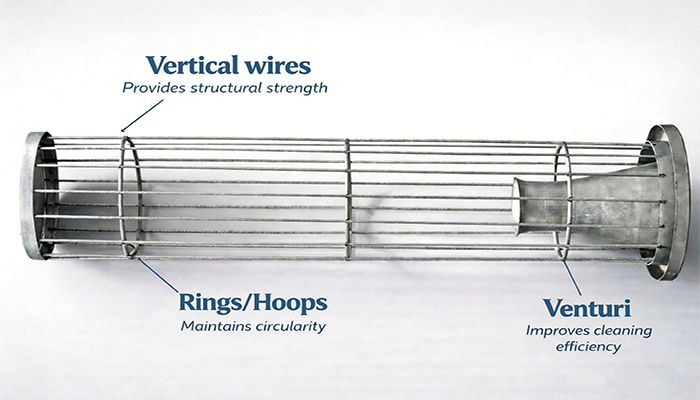
Round and flat cages serve different collector designs. Confirm outside diameter, length, number and diameter of vertical wires, ring spacing, joint style, top and bottom construction, venturi requirements and sectional connections against the approved drawing.
Inspection Points
- Overall straightness, roundness and dimensions
- Weld continuity and joint strength
- Burrs, sharp edges and surface damage
- Coating coverage and adhesion where specified
- Fit with the filter bag, tube sheet and cleaning system
Common Causes of Bag Wear
Incorrect diameter, poor roundness, misaligned joints, burrs and unsuitable surface treatment can contribute to localized wear. Cleaning alignment, installation and operating conditions should also be checked before attributing a failure to the cage alone.
Information Needed for Replacement
Send the cage drawing or sample dimensions together with the filter bag drawing, collector model, cleaning method, temperature, gas chemistry and quantity. FiltEdge coordinates U.S. replacement inquiries through the dust collector filter bag project page. Manufacturing details and available documentation are confirmed for the selected specification and order.