
Choosing a mist eliminator starts with the liquid droplets and operating conditions—not the appearance of the filter material. Structured PP mesh, glass-fibre beds, knitted mesh pads and vane separators use different configurations to capture and drain entrained liquid. This guide explains what to compare before requesting a quotation.
1. Compare materials, structures and complete separators separately
Polypropylene and glass fibre are materials. A three-dimensional mesh, knitted pad, fibre bed or vane pack describes a structure. A complete separator also needs supports, seals, drainage and a suitable housing. These categories overlap: knitted mesh can use different materials, and a glass-fibre sliver is not a complete filter element.
For example, Johns Manville’s product selector identifies C-glass staple-fibre sliver grades for mist elimination. That establishes a material application, not the efficiency of an assembled separator. [1] Likewise, a PP mesh reference number does not establish the performance of the finished installation.
2. Four approaches to mist elimination
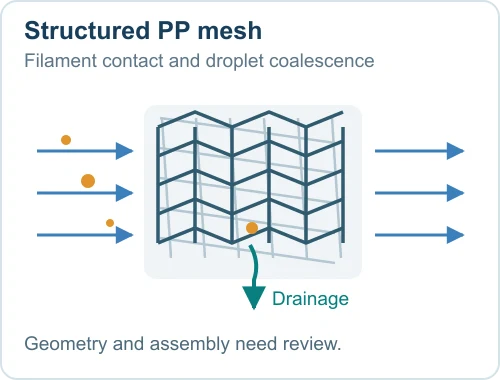
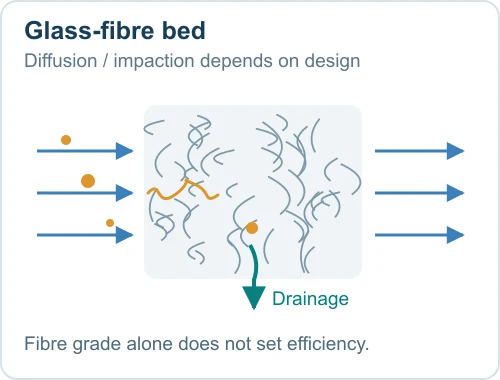
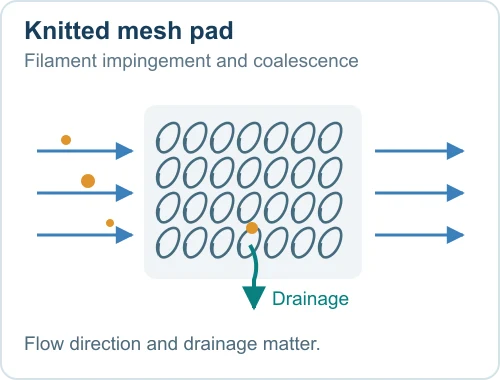
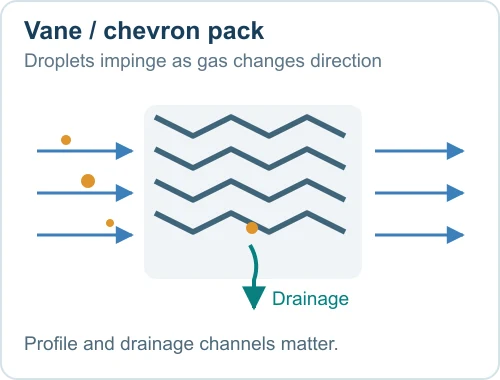
| Approach | How it works | Application direction | What needs checking |
|---|---|---|---|
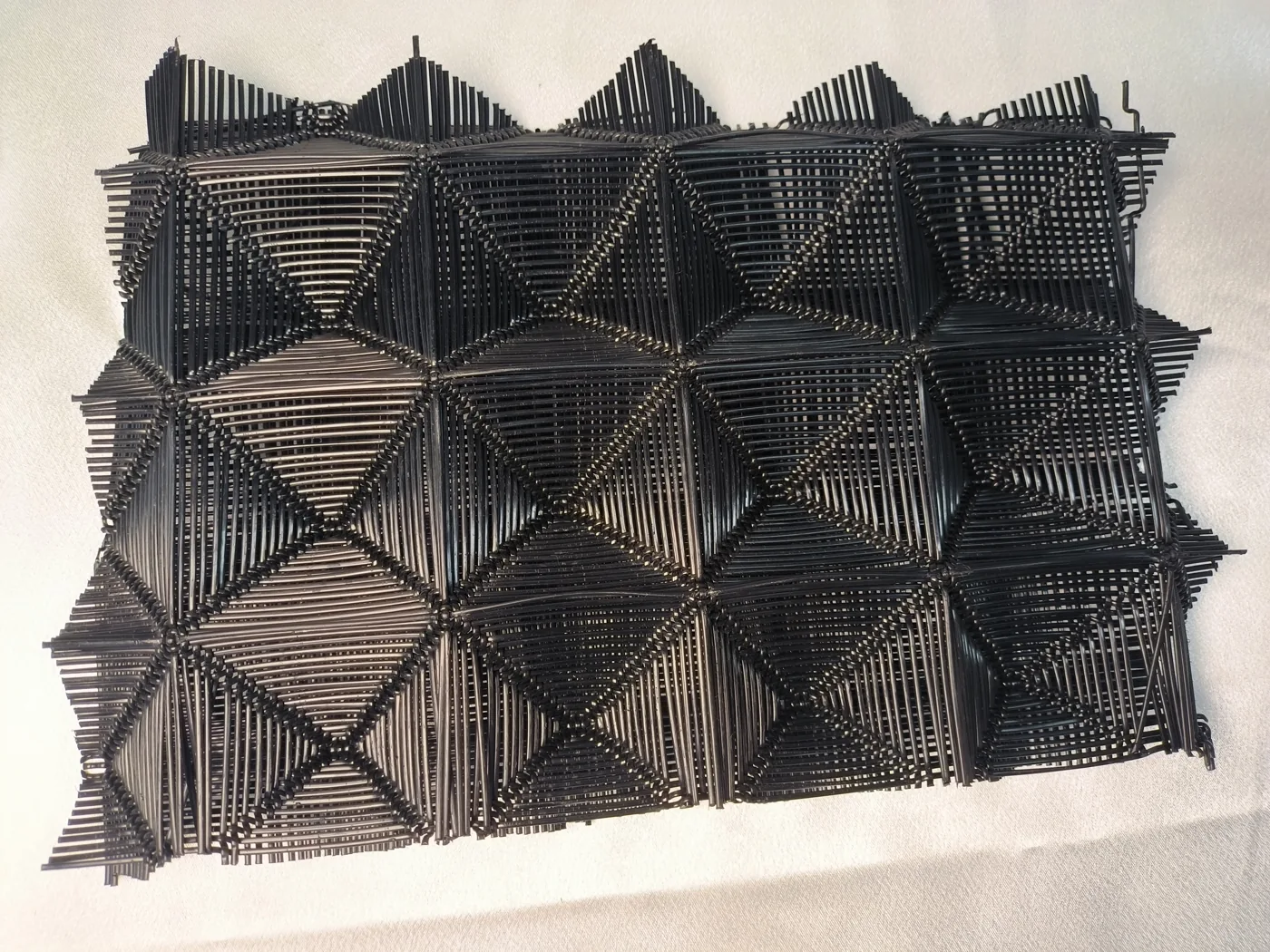
| Structured 3D PP monofilament mesh | Droplets contact filaments, coalesce and drain through the selected assembly. | Review for industrial droplet capture and oil-mist coalescence where the PP material and separator arrangement suit the process. | Layer count, filament geometry, chemistry, temperature, gas velocity, wet pressure drop and drainage. |
| Glass-fibre bed or candle element | Fibres capture droplets; designs may emphasise Brownian diffusion or impaction. | Diffusion-type designs can address fine and submicron mist. The required duty determines the bed construction. | Fibre grade, bed density, face velocity, pressure drop, solids loading and resistance to chemical attack. [2] |
| Knitted mesh pad | Droplets strike mesh filaments, combine and drain. | Liquid entrainment in scrubbers, absorbers, evaporators and other gas–liquid equipment. | Material, density, thickness, gas-flow direction, support and liquid-drainage arrangement. [3] |
| Vane or chevron separator | Changes in gas direction drive droplets onto vane surfaces for collection and drainage. | Consider suitable profiles for viscous liquids or duties with fouling risks. | Vane profile, gas capacity, liquid properties, drainage channels and re-entrainment. [4] |
A universal “best material” ranking would overlook the separation task. Compare proposed assemblies under matching conditions rather than treating the names above as interchangeable products.
3. Match the approach to the application
Scrubber outlet droplets
Establish the liquid chemistry, droplet loading and any solids first. Compare the proposed mesh or vane arrangement, drainage and cleaning access. Gas absorption by the scrubbing liquid is a separate process from capturing entrained droplets.
Fine acid mist or other aerosols
Ask for the droplet-size distribution and required outlet concentration. Diffusion-type fibre beds warrant consideration for fine mist; fibre-bed design and contamination control matter. Do not transfer a manufacturer’s result for one duty to an untested material or assembly. [2]
Oil-mist service
Describe the oil, temperature, viscosity, aerosol distribution and solid contamination. Review collection and drainage together: the material must be compatible, and the element must operate within the collector’s design conditions. A photograph alone cannot establish suitability.
Cooling-tower carryover
Define the entrained-water carryover target and tower conditions. Droplet capture does not remove water vapour. A proposed mesh assembly needs evidence for this duty before it is described as a validated drift eliminator.
4. Compare operating results, not headline efficiency alone
- Outlet liquid carryover: state the concentration, measurement method and operating point.
- Droplet capture: identify the size distribution and whether efficiency is reported by mass, number or size fraction.
- Pressure drop: compare clean and wet operation at the specified gas flow.
- Stability: review drainage, re-entrainment and behaviour as flow or liquid loading changes.
- Maintenance: assess fouling, cleaning compatibility, inspection access and replacement requirements.
Request these details together. An efficiency figure without its test conditions is insufficient for a like-for-like selection.
Check chemical compatibility, including HF
Acid resistance is chemical-specific. Hydrofluoric acid (HF) attacks glass; a general acid-resistant glass-fibre description is not evidence of suitability for HF-containing duty. [6] The rate of deterioration for a specific fibre grade or assembled element requires manufacturer and application data.
Polypropylene may be evaluated as an alternative where appropriate, but compatibility depends on the actual resin and additives, concentration, temperature, mixed chemistry and exposure conditions. Published PP piping-resistance tables provide background guidance, not qualification of a demister medium. [7] Confirm the media, frame, supports, joints and seals together before selecting the assembly.
Cleaning and potential reuse
The supplier of the structured PP media describes it as cleanable and reusable. [5] For a selected installation, confirm that the contaminant can be removed with a cleaning method compatible with the PP media and assembly. Inspect the filaments, joints, supports and drainage after cleaning, then check pressure drop and separation performance before returning the media to service. Cleaning is not a guarantee of unlimited reuse or recovery from every type of fouling.
Fine-mist capture and ease of maintenance are separate selection objectives. A diffusion-type fibre bed may address a finer aerosol duty, while a suitable PP mesh assembly may offer a practical cleaning route. Neither consideration alone establishes which option fits the process.
5. Review FiltEdge’s PP mesh references
If structured polypropylene media is a candidate for your process, review our 3D PP monofilament demister and coalescing media. The product page provides five reference styles, drawings and technical downloads. Finished dimensions, layers, frame and operating suitability require confirmation; the reference sheets are not independent performance certificates.
Frequently asked questions
Can a glass-fibre bed capture finer mist?
A suitable diffusion-type fibre-bed design can target fine and submicron droplets. This does not mean every cotton-like material or glass-fibre grade has the same capability. Fibre diameter is not a droplet-removal rating; the assembled bed and operating conditions determine the result. [2]
Are glass-fibre media always single-use?
The material name alone does not establish a single-use or washable specification. Follow the instructions for the exact medium and assembled filter. Replacing a media bed while retaining its housing is different from washing and reusing the fibres.
Can PP mesh directly replace glass-fibre media?
Not on appearance or material description alone. Compare the separation target, installed structure, operating limits and available test evidence before evaluating a replacement.
Is a finer fibre always better?
Fibre size is only one design variable. Bed construction, gas velocity, drainage, pressure drop and contamination also need review.
What should I send for a selection review?
Send the application, gas and liquid composition, flow, temperature, pressure, droplet information if available, solids loading, target outlet condition, installation dimensions, drainage direction and quantity. For replacement work, include the existing element’s drawing or identification.
Request a mist-eliminator configuration review
Technical references
- Johns Manville: Filtration & Separation Product Selector Guide, Sliver / Roving / Filtration Fibers, printed page 8. Product-specific current data should be confirmed with the manufacturer.
- Begg Cousland: A Mesh of Material Technology and Chemistry, 2021. Fibre-bed construction, diffusion and impaction designs.
- Sulzer: KnitMesh wire mesh mist eliminators. Capture, coalescence, drainage and applications.
- Sulzer: Mellachevron mist eliminators. Vane profiles and drainage considerations.
- Gnusys: Mist Eliminator. Supplier description of cleanable, reusable PP monofilament media. A cleaning method and return-to-service criteria remain application-specific.
- Corning Museum of Glass: Hydrofluoric acid. Glass attack; not a service-life rating for a particular fibre product.
- IPEX: Polypropylene Chemical Resistance Guide. Background on concentration, temperature and service conditions; piping data are not a demister qualification.
External references describe the cited manufacturers’ technologies. They do not establish FiltEdge supply scope, equivalence or guaranteed performance.