
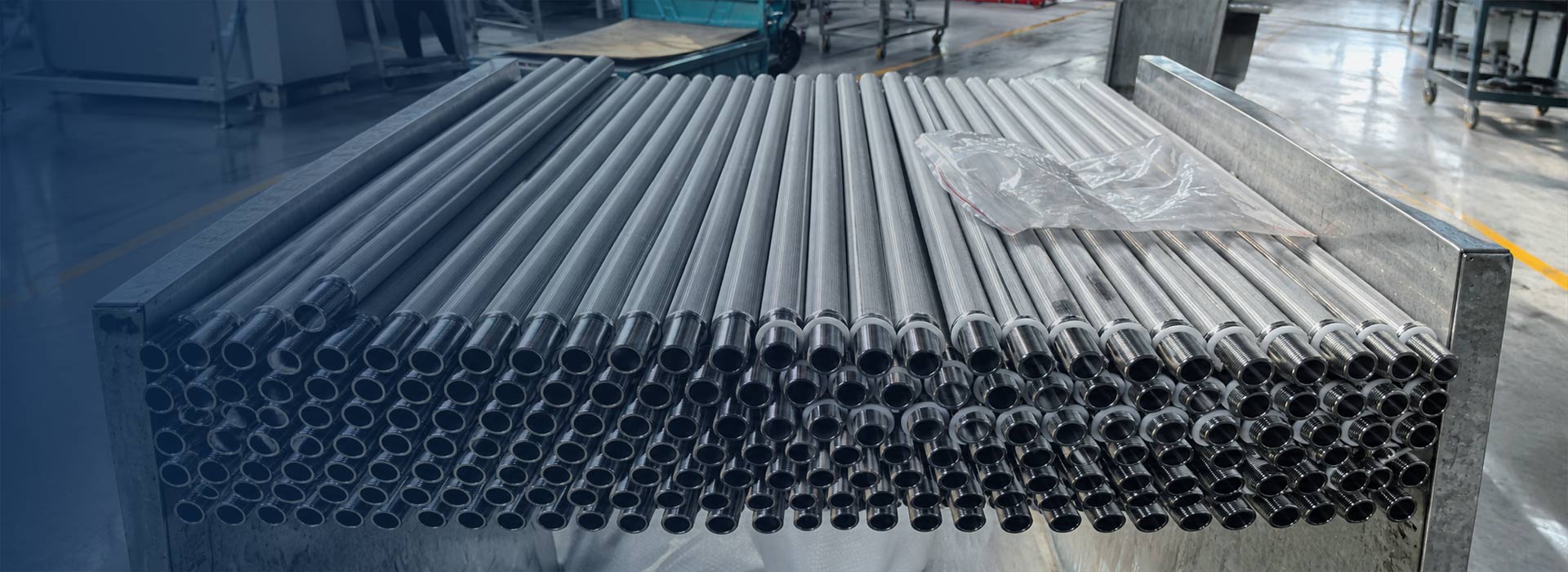
What Is FiltEdge’s Porous Metal Filter?
Porous Metal Filter is a filtering element that uses metal materials to form a porous or open pore structure. It can be used for high temperature, high pressure, corrosive media, and conditions that require durable and washable filtering elements.
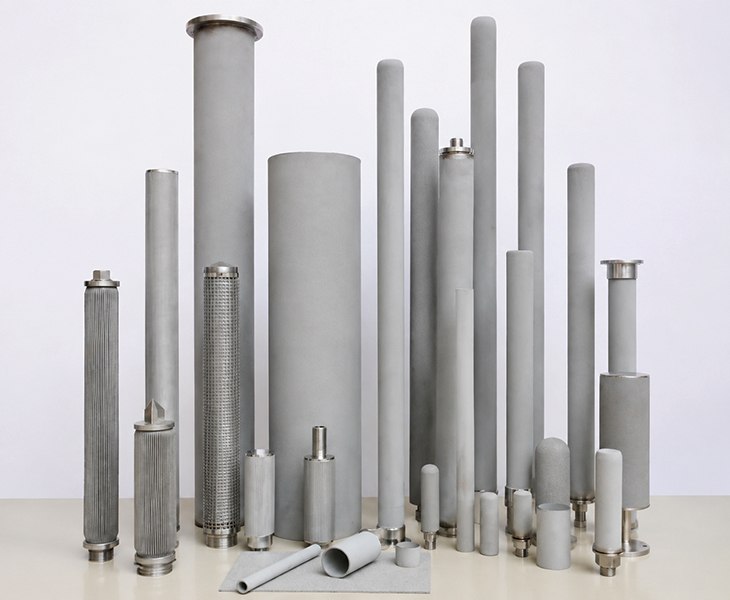
FiltEdge can provide sintered metal filters, woven wire mesh filters, metal fiber filters, and metal foam filters, covering various metal materials such as stainless steel, nickel alloy, titanium, etc., suitable for applications such as chemical, petrochemical, pharmaceutical, food, gas filtration, liquid filtration, and gas-liquid separation.
If you already have drawings, samples, dimensions, or specifications of existing filter cartridges, you can provide them directly to us, and we can customize and match them according to the original structure. If you are still unsure which porous metal filter to choose, you can also tell us your medium, temperature, pressure, flow rate, and filtration accuracy. We will analyze and select based on actual working conditions.
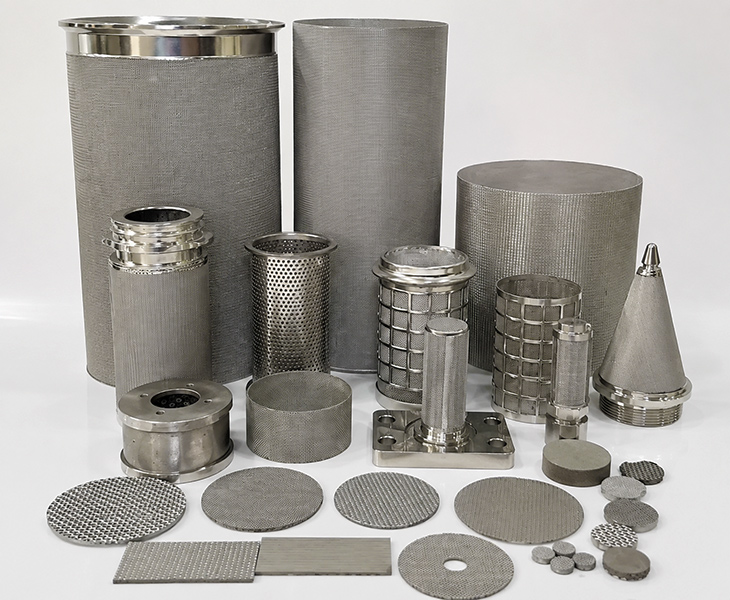
Types of Porous Metal Filters
FiltEdge offers over 100 types of Porous Metal Filters, covering different metal materials, pore structures, and product forms. You can choose suitable products based on pore structure, filtration method, mechanical strength, and adaptability to working conditions; If you are still unsure, we can also help you select based on your medium, temperature, pressure, and filtration requirements.
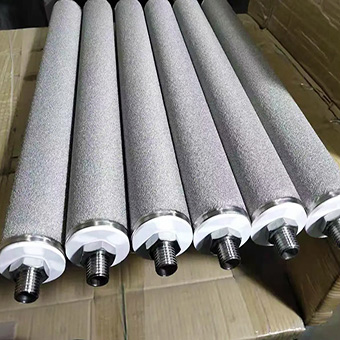
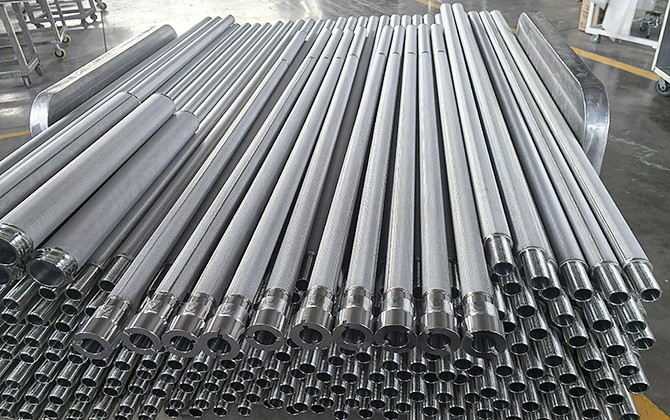
Sintered Metal Filters are the most commonly used style in industrial porous metal filters. Depending on the structure and material, a filtration range of 0.1-100 μ m can be provided. Common materials include 304, 316L stainless steel, nickel and nickel alloys, titanium, etc., which are suitable for high temperature, high pressure, and filtration conditions that require repeated cleaning.
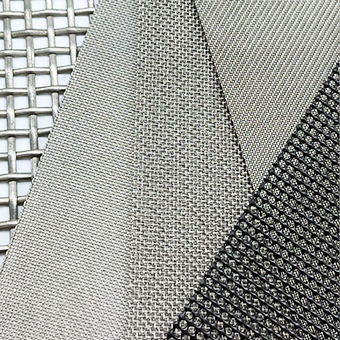
Woven Wire Mesh Filters use metal wires woven in a warp and weft structure to form filter media, mainly including flat filters, cylindrical filters, foldable filters, and other customized structures. It is suitable for applications such as surface filtration, backwashing, and repeated cleaning, and can also be processed according to your size and structural requirements.
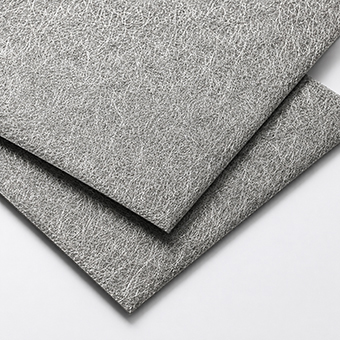
Metal Fiber Filters use fine metal fibers as the filtering medium, which can form a stable fiber porous structure. For working conditions that require finer filtration, high temperature adaptability, or stable metal filter materials, metal fiber filters can be used as an alternative to sintered powders and metal wire mesh.
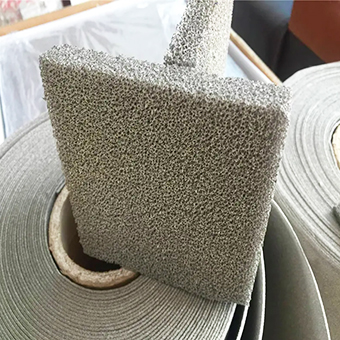
Metal Foam Filters uses open cell metal foam structure with a large number of connected pores. Common materials include nickel, copper, aluminum, and some stainless steel and other metal materials. Its three-dimensional open pore structure is suitable for special filtration, gas-liquid treatment, fluid distribution, and other applications that require open pore metal structures.
Porous Metal Filter Materials
When choosing a Porous Metal Filter, the material directly affects the filter’s temperature resistance, corrosion resistance, and service life. You can choose metal materials that are suitable for the current working conditions based on the composition of the medium, working temperature, and pressure.

Stainless Steel is made of 304, 316, 316L materials and is the most commonly used and cost-effective porous metal filter material, suitable for most conventional industrial filtration conditions.

Nickel alloys can be used in high temperature environments of approximately 500-1000 ° C; For high-temperature oxidation, alkaline media, or partially acidic media, it is also more suitable than ordinary stainless steel, but it depends on the alloy composition and media conditions.

The operating temperature of Titanium can usually reach about 300-500 ° C, making it suitable for applications that require high corrosion resistance, especially in seawater, chlorine containing media, and partially oxidizing chemical environments.

According to the filtering structure and working conditions, you can also choose bronze, copper, aluminum, and other alloys.
Porous Metal Filter Applications
From chemical liquids to high-temperature gases, Porous Metal Filters can handle a wide range of industrial filtration needs. You can choose the material and filter structure according to your process conditions.

If your process involves corrosive chemicals, high temperatures, or high pressures, you can choose materials such as 316L stainless steel, nickel alloys, or titanium based on the medium, and match them with suitable sintered metal or metal mesh structures.

When ordinary filter materials cannot meet the temperature requirements, metal porous filter materials can be used for process gas, hot air, and some high-temperature industrial gas filtration. You need to confirm the appropriate material based on the actual gas composition, working temperature, and pressure.

For chemical liquids, solvents, process liquids, and high-temperature liquids, you can choose the appropriate Porous Metal Filter based on the target filtration accuracy. If the viscosity of the liquid is high, flow rate, filtration area, and allowable pressure drop also need to be considered.

If you need to recover catalyst particles from process liquids or gases, you can choose a suitable porous metal structure based on particle size and process conditions. For systems that require repeated use, the cleaning method and regeneration capacity of the filter material should also be considered.

In gas-liquid mixed systems, the filtration efficiency depends not only on the pore size, but also on the flow rate, pressure drop, and media wettability. You can evaluate suitable porous metal media based on gas-liquid composition and separation requirements.

If your application has high requirements for hygiene and cleanliness, 316L stainless steel is a material worth considering. When selecting, it is also necessary to confirm surface roughness, welding quality, emptying design, and applicable FDA or related hygiene requirements.
Custom Porous Metal Filters
Whether you are replacing an existing filter or looking for a suitable Porous Metal Filter for a new device, FiltEdge can match customized solutions according to your requirements.
Customizable items include size, interface, metal material, aperture, filtration accuracy, pressure rating, and operating temperature. The product structure can also be adjusted according to the medium, flow rate, and installation conditions.
You can directly provide samples, drawings, photos, or specifications of existing filter cartridges. If it is a new device, you can also tell us the specific working conditions and design requirements, and we will assist you in confirming the appropriate product structure and specifications.
Why Choose FiltEdge for Porous Metal Filters?
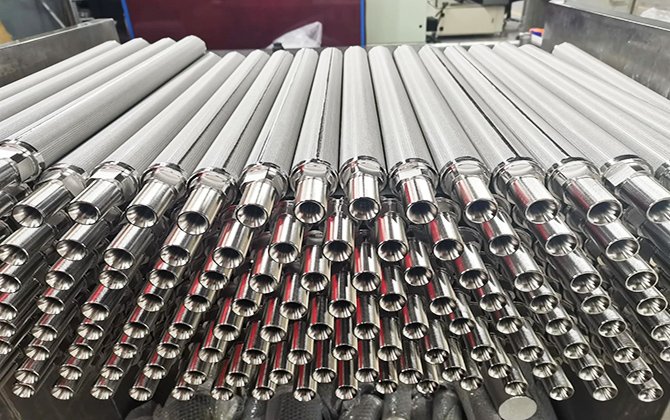
FiltEdge has over 20 years of experience in the fluid filtration industry, strictly controls product quality, and can provide customized solutions based on your drawings, samples, and operating conditions. Whether you need product selection, specification confirmation, or replacement of existing filters, we can assist you in matching the appropriate solution. We serve over 100 countries and regions worldwide, and rely on our offices and warehouses in China and the United States to provide support for your procurement and delivery.
How to Choose a Porous Metal Filter?
Different Porous Metal Filters are suitable for different filtering needs. You can first refer to the table below and narrow down the selection range based on the filtering structure and usage conditions; Please send us the fluid, temperature, pressure, target filtration rating, and flow rate, and provide us with the dimensions, drawings, or samples of the existing filter cartridge (if available). We can then determine the appropriate structure, materials, and specifications based on your actual working conditions.
- Filter Type
- Specification
- Compared
| Filter Type | Best Suited For | Key Features |
| Sintered Metal Filter | High-temperature, high-pressure applications requiring repeated cleaning | Stable porous structure, good mechanical strength, and a range of material and filtration rating options |
| Woven Wire Mesh Filter | Applications requiring defined openings, surface filtration, or backwashing | Regular openings, low flow resistance, and availability in flat, cylindrical, pleated, and custom configurations |
| Metal Fiber Filter | Applications requiring fibrous porous media or fine filtration structures | Filtration performance can be adjusted through fiber diameter, layer arrangement, and sintering method |
| Metal Foam Filter | Specialized applications requiring a three-dimensional open-cell structure | Interconnected pores suitable for specific filtration, gas-liquid handling, and fluid distribution applications |
| Specification | What You Need to Confirm |
| Material | 304, 316L, nickel alloy, titanium, etc. |
| Pore Size | Required pore structure or pore size |
| Filtration Rating | Target particle removal requirement |
| Porosity | Porosity of the porous media where applicable |
| Permeability | Required flow performance |
| Shape | Cartridge, tube, disc, plate, mesh, etc. |
| Dimensions | OD, ID, length, thickness, etc. |
| Connection | Thread, flange, welded or custom connection |
| Operating Temperature | Normal and maximum process temperature |
| Differential Pressure | Normal and maximum pressure drop |
| Fluid | Gas, liquid or gas-liquid mixture |
| Cleaning Method | Backwash, chemical cleaning, ultrasonic cleaning, etc. |
| Sintered Metal | Woven Wire Mesh | Metal Fiber | Metal Foam | |
| Basic Structure | Sintered porous structure | Woven metal wires | Metallic fiber structure | Open-cell metal structure |
| Typical Construction | Powder, fiber or layered mesh | Single or multiple woven layers | Fiber felt or bonded fiber media | Open-cell porous metal |
| Pore Structure | Controlled porous network | Defined openings | Fibrous pores | Interconnected cells |
| Filtration Type | Surface / depth depending on construction | Mainly surface filtration | Depth/fibrous filtration depending on structure | Application dependent |
| High-Temperature Capability | Material dependent, generally strong | Material dependent | Material dependent | Material dependent |
| Reusable | Often | Yes, depending on application | Often | Application dependent |
| Typical Advantage | Rigid and stable porous structure | Defined openings and high open area | Fine fibrous structure | High open-cell volume |
| Typical Applications | Process, gas and liquid filtration | Mesh cartridges and surface filtration | Fine filtration and high-temperature applications | Specialized filtration and flow applications |
Porous Metal Filters can be repeatedly cleaned and used, but the appropriate cleaning method needs to be selected according to different structures and materials.
Porous Metal Filters typically last around 3-5 years. The specific usage time depends on the working temperature, pressure, fluid properties, particle load, and cleaning frequency.
Sintered metal filters are suitable when you need a stable porous structure and fine filtration. Woven wire mesh filters are often preferred for defined openings, surface filtration and easier backwashing. Your particle size, flow requirements and cleaning method will help determine the better option.