Introduction
Liquid filter bags are widely used and hold promising prospects due to their practical performance and cost-effectiveness. Utilizing fluid filter bags to enhance product quality, ensure production safety, and reduce operational costs is an established trend. Understanding how filter bags work and mastering the selection methodology are essential steps for you.
Understanding Liquid Filter Bags
Liquid filter bags are replaceable filter consumables installed inside bag filter housings. They remove solid impurities from liquids through physical interception. Made of specific materials and with specific filtration precision grades, they are filtration elements that can be evaluated in terms of precision and material to determine their quality.
It usually works together with the filter housing, support basket, and sealing device to form a complete bag filter system. It is a key component for liquid clarification, purification, and protection of downstream equipment in the chemical, food, and pharmaceutical industries.
Its core function is to achieve solid-liquid separation under pressure, retaining solid particles and allowing liquids to pass through, thereby achieving purification.
Classification Of Liquid Filter Bag – Material, Structure And Process
Filter Bag Material
PP Filter Bag
The most common and economical choice. Offers good chemical compatibility, resistant to most acids, alkalis, and solvents. Operating temperature typically ≤60°C (heat-sealed type) or ≤90°C (sewn type). A filtration rating selection range from 0.1 to 500 micrometers is available. Widely used in water treatment, paints, and food.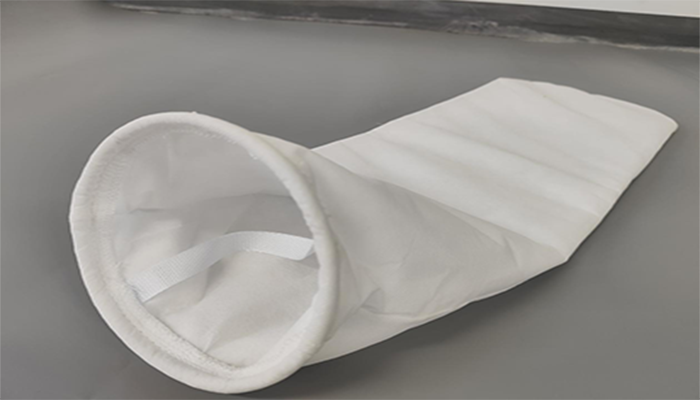
PE Filter Bag
It can also be called PET filter bag. High strength, good abrasion resistance, better temperature resistance than PP (up to 135°C). However, stability in strong acid or alkali environments is weaker. Commonly used for lubricating oil, hydraulic oil, and high-temperature process water filtration.
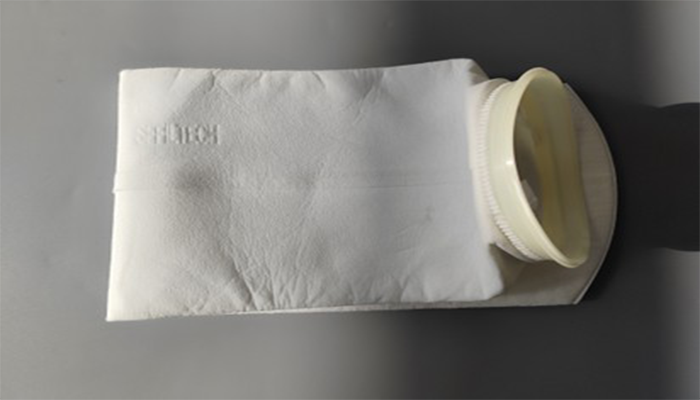
NYLON Filter Bag
It offers excellent abrasion resistance and strength, good elasticity, low affinity for oil and grease substances, and is easy to clean. However, it has relatively poor resistance to strong acids. It is commonly used in the filtration of ink and resin.
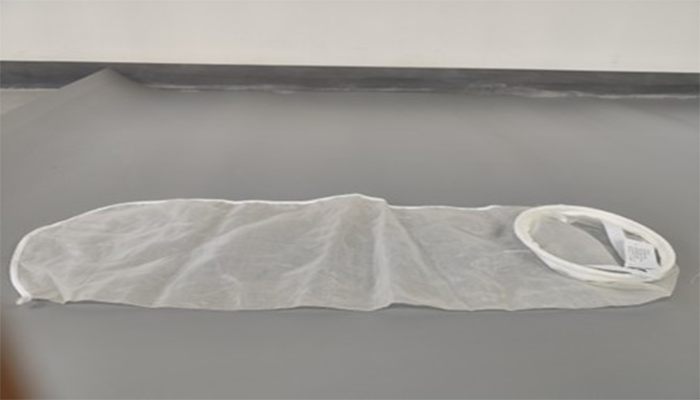
PTFE Filter Bag
It is resistant to almost all strong acids, strong alkalis, and organic solvents, and offers an extremely wide operating temperature range (-200°C to 260°C). It has an extremely low coefficient of friction, resulting in minimal wear and high durability. PTFE bags typically exist in the form of membranes or pure felt, and are used for the most demanding chemical filtration and high-temperature flue gas condensate treatment, but they also come with a higher cost.
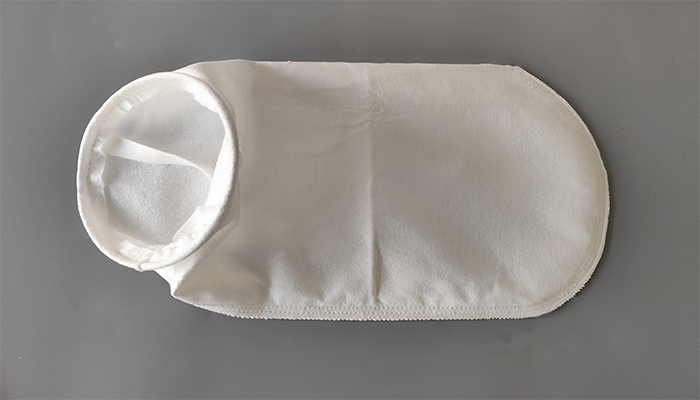
Stainless Steel Filter Bag
Metal mesh filter bag can be cleaned and reused multiple times, extremely strong, resistant to high temperature and pressure. Relatively fixed accuracy, mostly used for coarse filtration or as a support mesh for other filter bags.
Multi-layer Composite Materials
Designed to meet special requirements (e.g., absolute accuracy, high flow rate), usually higher priced.
Classification By Key Structure Of Liquid Filter Bag
The interface type is the sealing method connecting the bag to the filter housing, ensuring no leakage after installation, and must exactly match your filter model.
Snap-in Type (e.g., 222/226): The bag opening is sewn with an elastic or stainless steel sealing ring, which seals against the basket opening via its tension. This is the most mainstream style. Common standards include 222 (with a sealing ring, snaps into place by elastic force) and 226 (with a stainless steel ring, locked with a clamp).
Open Type: The bag opening has no sealing ring; it is sealed by a dedicated pressure plate or tie. Often used for large-sized or non-standard equipment.
Sewing Process Of Your Filter Bag (Affects Strength And Leakage Prevention)
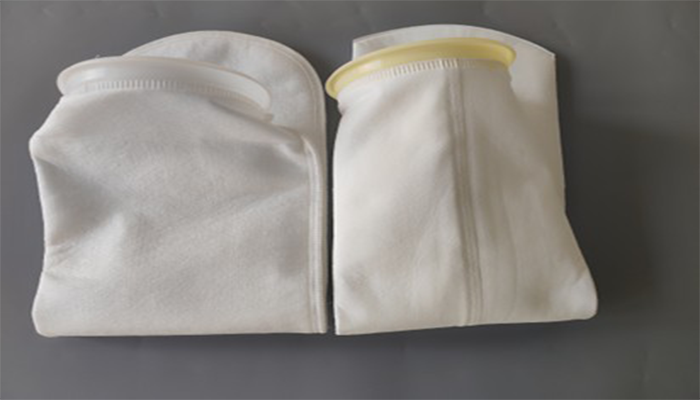
Sewn Fluid Filter Bag: Sewn using thread of the same or higher-performance material, high strength, wide applicability.
Heat-sealed (Welded) Fluid Filter Bag: Seamlessly joined by melting the material itself at high temperature, eliminating potential side leakage from stitch holes. The preferred choice for high-standard applications, especially suitable for PP material.
Classification By Functional Characteristics Of A Useful Liquid Filter Bag
Standard Efficiency Filter Bag: Meets conventional particle removal.
High-Efficiency Filter Bag: Uses denser fiber layers or composite structures for higher interception rates.
Adsorption Function Filter Bag: Incorporates adsorbents like activated carbon into the fibers, capable of simultaneously removing color, odor, free chlorine, or trace oils.
Classification By Layer Structure Of Industrial Filter Bag
Single-layer Filter Bag: Made of one material.
Multi-layer Composite Filter Bag: For example, a “melt-blown + needle-punched” composite structure, where the surface(loose layer) holds dirt and the inner (dense layer) maintains accuracy, achieving a perfect combination of high dirt-holding capacity and long life.
Functions Of Industrial Liquid Filtration Bags
3.1 Liquid Filter Bag For Process Purification: Achieves desired quality specifications.
3.2 Industrial Liquid Filter Bag for Clarification Filtration: Intercepts impurities to safeguard product quality, equipment safety, and production continuity.
3.3 Liquid Filtration Bag for Quality Enhancement: Ensures the purity, clarity, and consistency of the final product.
3.4 Filter Bag For Equipment Protection: Prevents wear or clogging of key components such as pumps, nozzles, heat, and instruments caused by particulate matter.
3.5 Filter Bags for Liquid To Environmental Compliance: Enables environmentally friendly production practices.
3.6 Liquid Filter Bags For Process Optimization: Recovers valuable catalysts or products, minimizing waste.
3.7 Industrial Filter Bag For Overall Cost Reduction: Offers better cost-performance and simpler maintenance compared to other forms like filter cartridges, especially in high-flow, medium-contamination applications.
Working Principle Of Bag Filter For Liquid Filtration
The core working principle is precise mechanical sieving, primarily relying on direct interception. Under pressure drive, the liquid to be filtered, carrying solid particles, flows from the inside to the outside of the filter bag.
The myriad of tiny pores or fiber interstices in the filter material act as “checkpoints.” Particles larger than these pores are effectively trapped inside the bag. As filtration proceeds, the trapped particles gradually form a “filter cake” on the inner surface of the bag. This cake itself can aid in intercepting finer particles, thereby enhancing filtration accuracy during a certain operational phase.
Advantages And Disadvantages Of Fluid Filter Bags
Core Advantages Of The Filter Bag
Cost-effective, particularly suitable for large-flow pre-treatment.
Flexible operation, with quick and easy changeovers, ideal for multi-variety, small-batch production lines.
Visual management, as particles are mainly retained on or near the surface, makes it easy to observe contamination levels and schedule replacements.
Environmentally friendly choice, as most non-woven filter bags are made of polypropylene (PP), which produces only carbon dioxide and water upon incineration, resulting in a lower environmental burden.
Limitations Of Industrial Liquid Filter Bag
Not suitable for highly viscous or gelatinous liquids, as such substances can rapidly clog the surface pores.
May require overly frequent replacements for slurries with extremely high solid content; in such cases, centrifuges or filter presses are more appropriate.
May be less suitable than specially treated filter cartridges in ultra-pure electronic chemical applications where absolute zero fiber shedding is required.
Other filtration forms, like filter cartridges or centrifuges, may be more cost-effective for applications with very large flow rates or extremely high solid content.
Applicable Operating Conditions For Widely-used Filter Bags
Liquid filter bags are active in almost all industrial fields involving liquids.
The filter bags used in liquid bag filters are characterized by easy replacement, low cost, and a wide variety of choices. Various precision levels and materials are available to meet your diverse filtration needs, making them suitable for intermittent operations or multi-variety, small-batch production lines.
The suitable application scenarios are as follows:
Water Treatment: Pre-filtration for reverse osmosis systems, descaling of cooling circulating water, and wastewater reuse pre-treatment.
Chemical Industry: Raw material purification, catalyst recovery, final product protection, and filtration.
Paints & Inks: Ensures flawless spraying and uniform color, removes gels and skins.
Food & Beverage: Clarification of syrups, edible oils, juices, beer, wine, enhancing product gloss and stability.
Pharmaceutical & Bioengineering: Pre-protection for process water and water for injection systems, pre-sterilization filtration of culture media.
Electroplating & Surface Treatment: Continuous circulation filtration of plating baths, removal of anode slime, ensuring bright and smooth plating.
Machine Tools & Energy: Online purification of cutting fluids, hydraulic oils, and lubricants, extending the life of oils and equipment.
How To Choose The Right Liquid Filter Bag For Yourself
The diverse performance of fluid filter bags stems from the exquisite combination of materials science and structural design. Facing numerous indicators requires trade-offs to balance the desired filter bag performance, economic cost, and environmental harmony.
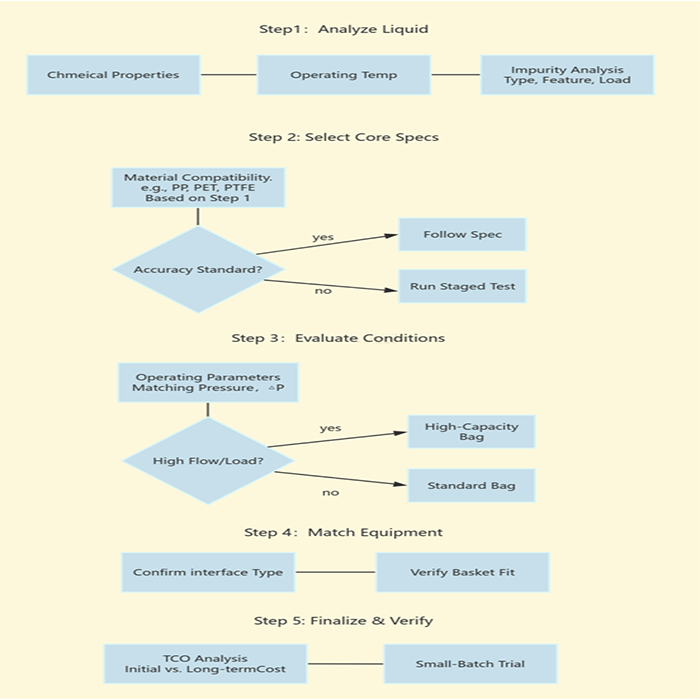
Fluid Filter Bag Five-Step Selection Method:
Step One – The Foundation: Analyze Your Liquid to be Filtered
The chemical properties of the liquid include its main components and pH. These must be chemically compatible with the filter bag material to avoid dissolution, swelling, or chemical reactions.
Operating Temperature: The temperature resistance of the selected filter media must be higher than both the long-term operating temperature and the peak temperature.
Impurity Characteristics: Analyze what needs to be removed (particles, colloids, oils). What is the target cleanliness? What is the concentration (level of contamination)? What is the particle hardness? Does it contain oils or sticky substances?
Step Two – The Core: Determine Filter Bag Accuracy and Material
The Accuracy Of Liquid Filter Bags
The accuracy is the core parameter for selection, chosen based on target particle size and required interception level.
If there are clear process standards, directly follow the filter bag precision requirements specified by technical personnel.
If no standard exists, it is recommended to reference historical experience, process standards, or conduct a Staged Accuracy Test—using lower accuracy bags first to remove most impurities and protect downstream high-accuracy bags—to determine an economical and meet the standard filtration accuracy.
Filter Bag Material is Core
The filter media directly determine the chemical environments and temperature conditions it can handle. Lock in suitable optional materials based on chemical compatibility and temperature: PP filter, PET filter, NMO filter, PTFE filter, stainless steel media, or multi-layer composite materials.
Step Three: Evaluate the Application Conditions of the Filter Bag Filter
Understanding the operating pressure and allowable pressure drop of your liquid bag filter. This ensures that the selected filter bag size meets pressure drop requirements.
Understanding the contaminant load is also crucial. For applications involving high flow rates and high contamination levels, this indicates that selecting a filter bag with a larger size or a high dirt-holding capacity design is more suitable.
Step Four – The Prerequisite
The Filter Bag Must Match Your Filtration Equipment, ensuring it can be installed correctly and sealed.
Confirm the bag filter housing interface model: Measure dimensions or remove an old filter bag to see the sealing ring style (222 or 226).
Confirm filter basket size: Length, diameter, ensuring the new filter bag fits.
Step Five: Comprehensive Evaluation and Verification
Cost Consideration: Compare the initial unit price and the comprehensive replacement cost. High dirt-holding capacity filter bags may be more cost-saving. A more expensive but high-capacity, long-life, low-replacement-frequency quality filter bag may have a much lower total long-term cost than a cheap bag requiring frequent replacement, while also reducing downtime losses.
Small-Batch Trial: Before bulk purchasing, must order a small sample for actual condition testing to verify filtration effect and lifespan.
A real FILTEDGE case: Upgrading a major chemical plant’s filters from 20-micron (nominal) to 10-micron (absolute) boosted product purity by 15%.
If you have a specific application scenario (e.g., what liquid to filter, what impurities to remove, what standard to achieve), I can provide more targeted professional selection advice. Contact us for a free filtration consultation.
About FILTEDGE
FILTEDGE has 20 years of experience in the environmental protection filtration industry, dedicated to meeting various filtration requirements.
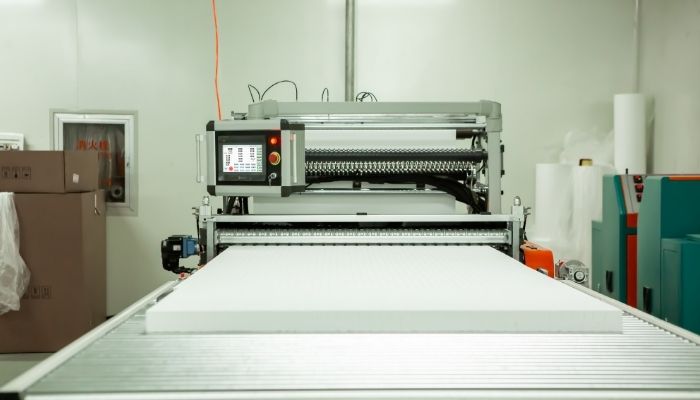
We attach great importance to quality and craftsmanship, and adhere to strict production process standards and systematic quality inspection standards from raw material procurement to product delivery.
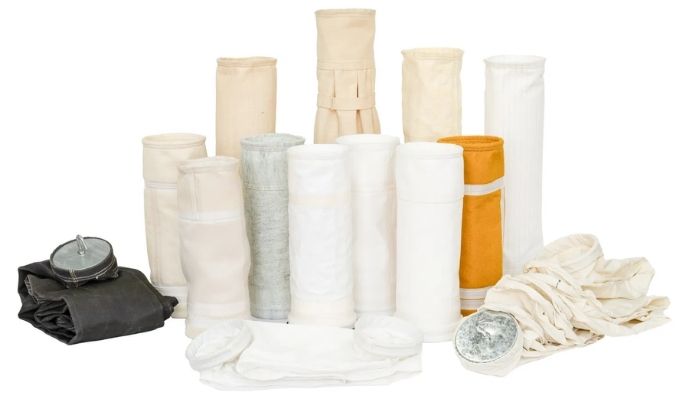
We design unique services of custom filter bags and professional technical teams to specifically help users solve problems, like these pictures.
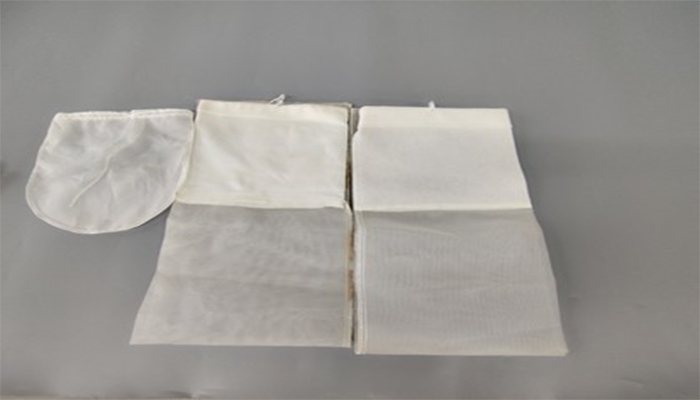
Besides, I’m very glad to let you know us from a real case below.
Case Study: Optimizing 800-Micron Liquid Filtration for Chemical Processing
While understanding the theory of filter bags is essential, real-world applications often require engineering expertise to overcome mechanical challenges. Below is a case study highlighting how FILTEDGE solved a persistent filtration failure for a chemical manufacturing plant.
The Challenge: Frequent Bag Failure & High Maintenance
A chemical plant was utilizing conventional needle-punched felt filter bags to remove large suspended particles from a continuous production line. Despite following standard selection protocols, the customer faced:
Premature Bag Damage: Frequent tearing at the seams and edges due to mechanical stress and agitation.
Fiber Shedding: Needle-punched felt deformed under high flow, leading to potential downstream contamination.
High Operational Costs: Frequent replacements led to increased downtime and labor costs.
Technical Diagnosis & Selection
After evaluating the operating conditions, FILTEDGE’s technical team determined that the application required Surface Filtration rather than depth filtration.
Target Particle Size: 800 Microns.
Material Choice: Nylon Monofilament Mesh was selected for its high tensile strength, precise pore size, and excellent chemical compatibility. Unlike felt, nylon mesh provides a stable structure that resists deformation under pressure.
The FILTEDGE Solution: 3-Stage Reinforced Construction
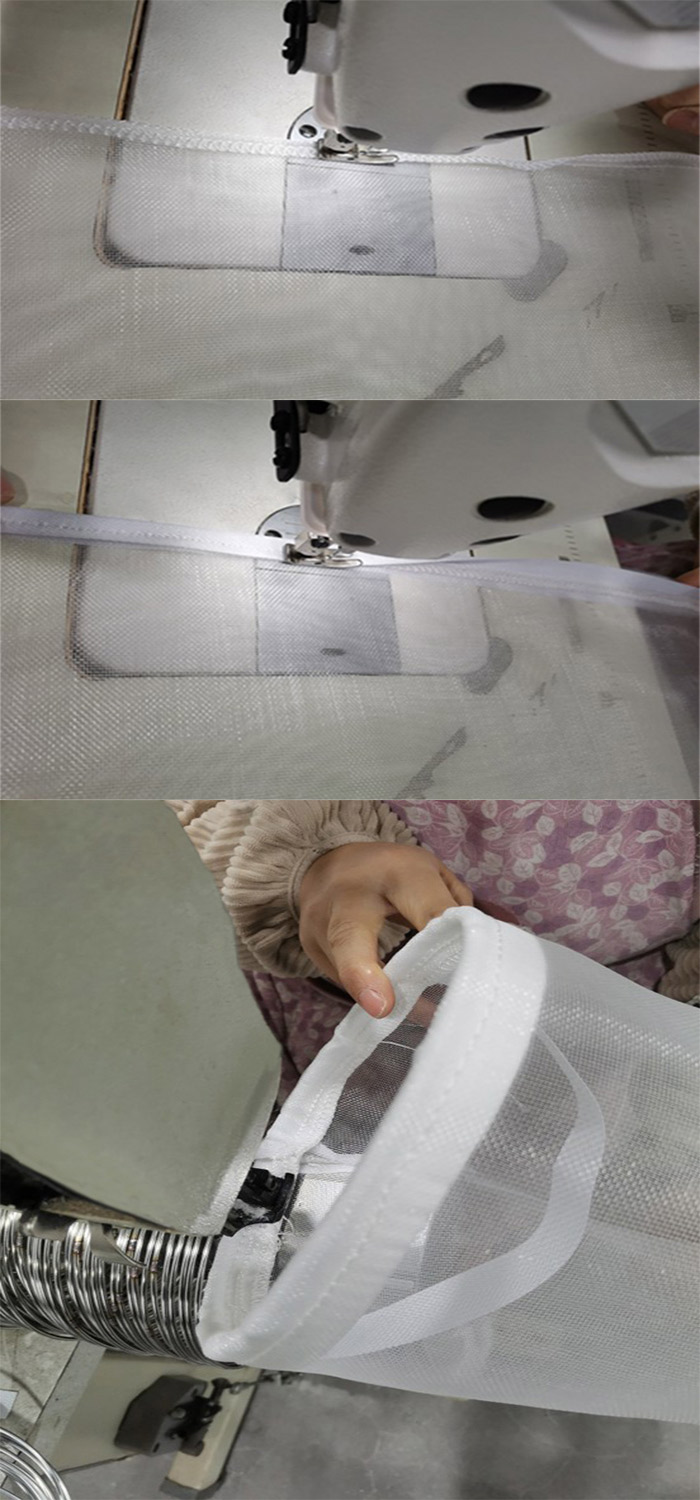
To eliminate the “edge failure” issue, FILTEDGE implemented a proprietary Reinforced Multi-Stage Edge Treatment specifically for this nylon mesh application:
Five-Thread Overlock Stitching: Applied to all mesh edges for initial structural reinforcement.
Folded Edge Seam: The mesh is folded before stitching to double the material thickness at high-stress points.
Single-Needle Binding Stitch: A final seal ensures dimensional stability and prevents bypass, even under fluctuating flow rates.
Performance Results: By switching from standard felt to FILTEDGE’s reinforced nylon mesh filter bags, the customer achieved:
Significantly Extended Service Life: The reinforced seams eliminated premature tearing, allowing the bags to last 2 times longer.
Zero Fiber Contamination: The monofilament structure ensured clean, consistent filtration.
Lower Total Cost of Ownership (TCO): Reduced replacement frequency and maintenance labor led to a significant annual saving.
Conclusion
Manufacturing details—such as stitching technology and seam reinforcement—are just as critical as material selection. This project demonstrates FILTEDGE’s commitment to providing process-oriented engineering support beyond simple product supply.
FAQ
- How to interpret a fluid filter bag model?
Take PP-0220-05-S as an example:
PP: Material is Polypropylene.
0220: Size code, usually indicating length and perimeter.
05: Filtration accuracy is 5µm.
S: May represent the interface type or sewing process, e.g., Heat-Sealed.
- What are the scientific installation steps for fluid filter bags?
First, inspect the filter basket to ensure no residue from old bags and no burrs.
Then, completely immerse the new filter bag in the same liquid as the process for a few seconds to remove air.
Carefully place it into the basket, ensuring the sealing ring (or interface) lies flat and fits snugly. against the basket opening.
Finally, place the pressure plate/cover and evenly and symmetrically tighten the bolts.
- Are there any tips for judging when to replace a fluid filter bag?
Primary Signal: Significant drop in system flow rate, or inlet/outlet pressure (differential pressure) reaches the equipment’s maximum allowable value (usually 0.2-0.35 MPa).
Secondary Signal:(Visible particulate impurities appear in the downstream product.
- Why is it recommended to pre-wet the filter bag with liquid before installation?
Pre-wetting (especially for needled felt filter bags) helps to remove air trapped within the interstitial spaces of the filter media fibers. This serves to:
Reduce pressure fluctuations during the initial filtration phase.
Ensure the liquid flows evenly across the entire surface area of the filter bag, maximizing its effective filtration area and improving efficiency.
Facilitate the earlier establishment of a stable filtration pressure differential.
- Can I install filter bags of any size into my filter housing?
No. The length, diameter, and interface of the filter bag must exactly match the dimensions of your filter basket and the design of the housing. Installing an undersized bag can cause liquid bypass, leading to filtration failure, while an oversized bag may not install or seal correctly. Always refer to the equipment manual to select the correct size.
6 . What solutions are available for filtration processes that cannot be shut down?
If there is a requirement for continuous process operation, it is recommended that you prioritize the consideration of dual-vessel (duplex) filters.
- Can filter bags be cleaned and reused?
The vast majority of disposable non-woven filter bags (e.g., made of PP, PET) are designed not to be cleaned and reused. Washing seldom fully restores their filtration structure and performance, and it carries a risk of contamination. Only metal mesh filter bags (stainless steel) are typically designed to be cleaned and reused several times.
- How’s the Liquid Filter Bags Market
The market prospects are broad. The global market size has already reached billions of US dollars and maintains stable growth, particularly in the Asia-Pacific region, providing sustained development space for industry participants.
The demand for filter bags is both rigid and extensive, making them essential consumables in numerous critical industries such as chemicals, food and beverage, pharmaceuticals, and water treatment. This demand remains stable.
In the meantime, stringent environmental regulations, upgrades in downstream industries, and heightened requirements for production safety and product quality continuously drive the growth in demand for high-end, precision filtration.
Driven strongly by policies and trends, continuous technological upgrades—including material innovations (such as PTFE membranes) and process optimizations (like customized production)—continuously enhance product added value and technical barriers.