
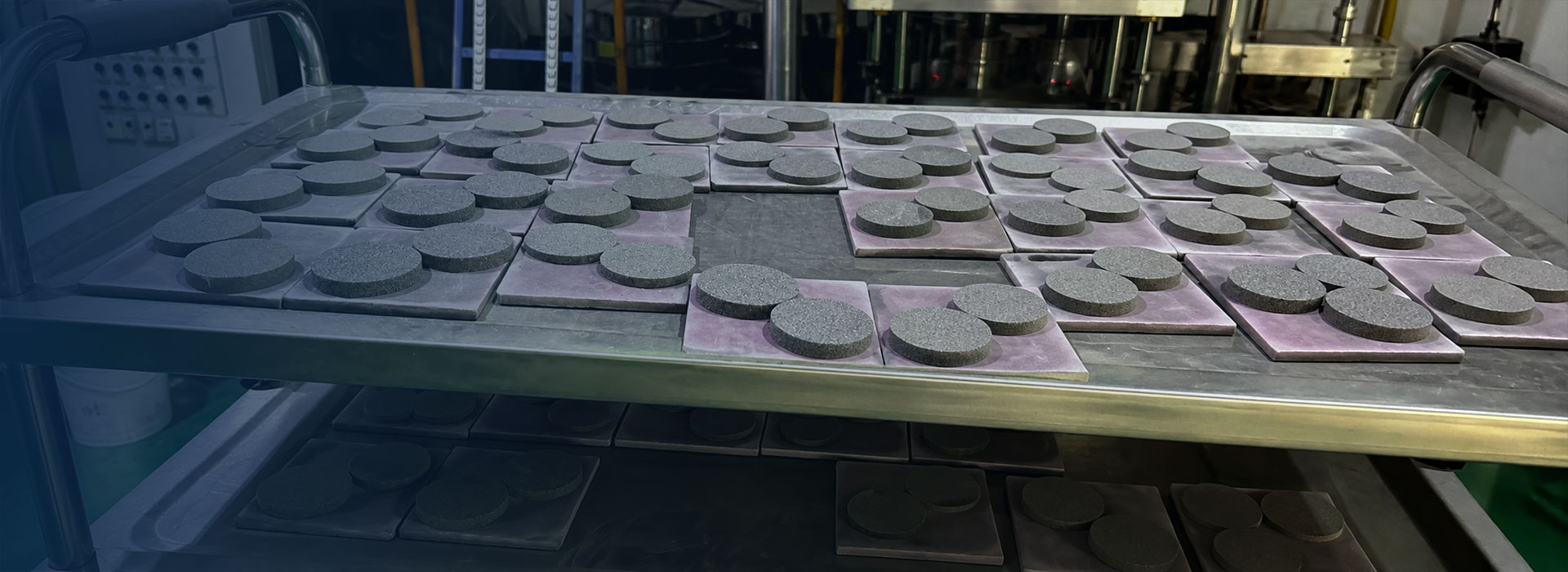
Types Of Sintered Filter Disc
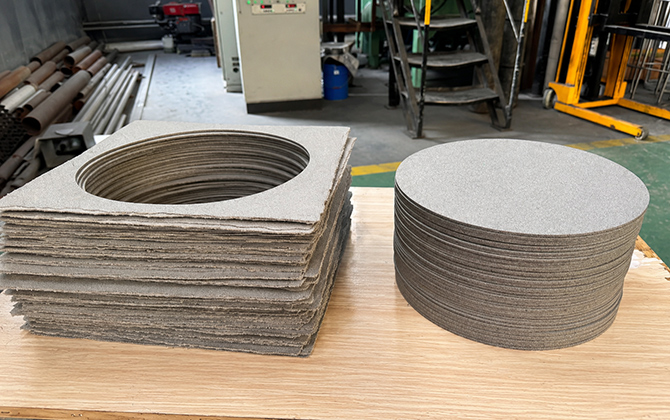
FiltEdge has over a hundred types of sintered filter discs, with filter discs of different sizes, accuracies, materials, and structures to meet your various process requirements.
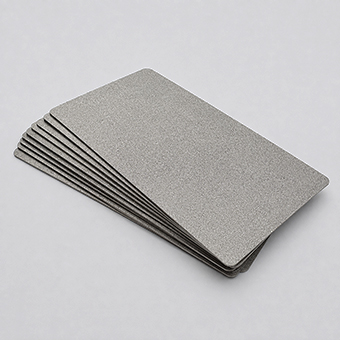
The Sintered filter sheet is made of 304, 316, and 316L stainless steel materials, which combine cost-effectiveness and high performance.
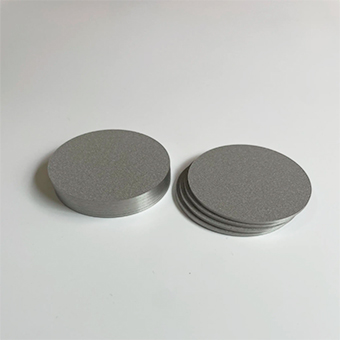
In addition to stainless steel materials, there are high-performance metals such as nickel alloys and titanium/titanium alloys that can handle higher temperatures and corrosive harsh working conditions for you.
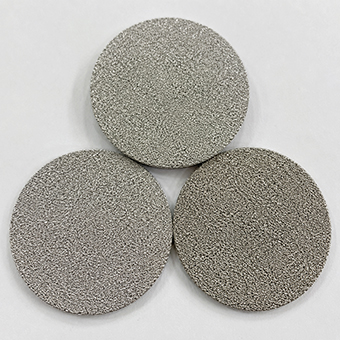
Porous powder-sintered structure, The precision can reach 0.1 microns, which can deeply filter fine impurities for you.
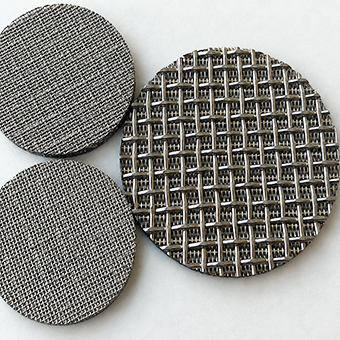
Multi layer woven metal mesh is laminated and sintered together, which is sturdy, not easily deformed, and easy to clean, suitable for working conditions that can withstand large pressure differentials or backwashing.
Advantages Of Sintered Filter Disc
The 6 major advantages of FiltEdge’s Sinteredfilter disc can accurately solve pain points in production and operation, and stabilize the quality of each batch of products for you.

FiltEdge’s sintering technology can achieve consistent narrow pore size distribution for each batch, achieving quantifiable interception efficiency and providing you with quantifiable and traceable filtering results to ensure your product yield.

The Sintered filter disc can withstand positive pressure differentials of up to 0.6 MPa or more, as well as frequent backwashing, achieving no deformation, rupture, or medium detachment, thus eliminating secondary pollution in production.

Excellent pore size, porosity, and filtration area ensure long-term stable pressure drop operation of the sintered filter disc. Stable circulation and predictable cleaning cycles help you avoid unplanned downtime.

FiltEdge can provide you with various metal materials such as stainless steel, nickel alloy, titanium alloy, etc., to cope with acidic, alkaline, chloride containing ions, organic solvents and other corrosive media.

Support various cleaning and regeneration methods such as gas-liquid mixing backwash, ultrasonic cleaning, chemical cleaning, and high-temperature calcination. The flow recovery rate after cleaning can reach over 85%, reducing the long-term cost of disposable filter materials for you.

The metal material of the sintered filter disc can be used in a working environment of 600-700 ℃ for a long time, which can maintain a more stable structure and filtration accuracy than plastic filter materials, providing a reliable barrier for your process.
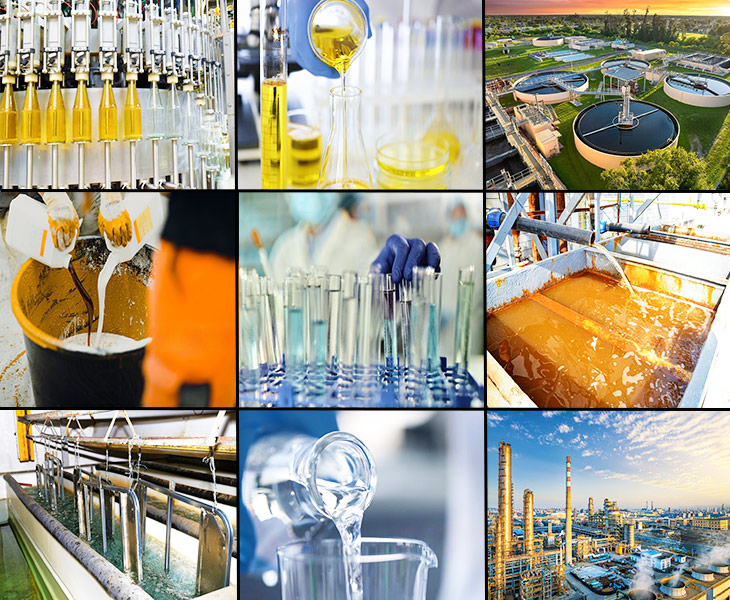
Application Of Sintered Filter Disc
Customized Sintered Filter Disc
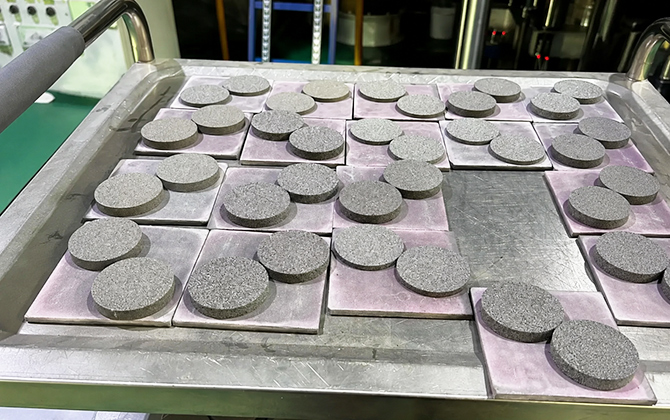
FiltEdge will customize a Sintered filter disc for you based on your actual working conditions or needs, including requirement communication, material/structure selection, sintering and forming, machining, testing, and finally mass production. Not only in terms of size and material, but also in depth OEM/ODM customization of ports, filtering structures, packaging, branding, etc., to assist your production process and brand market.
Why Choose FiltEdge’s Sintered Filter Disc?
FiltEdge LLC is a U.S. company established in 2023, supported by SFFILTECH in China, established in 2006. Manufacturing support is provided through SFFILTECH in China. Confirm product specifications, available quality documents, pricing and delivery in the quotation. Certificates must be checked for the relevant entity, facility and product. Support is arranged during business hours; any on-site service or warranty terms require separate agreement.
Specification of Sintered Filter Disc
Here are the parameters and material comparisons of FiltEdge’s sintered filter disc, as well as Powder Sintered Disc vs. Sintered Mesh Disc, to help you quickly understand. If customization is required, please contact us directly.
- Specification of Sintered Filter Disc
- Material Comparison
- Structural Comparison
| Parameter | Typical Value / Range |
| Product Name | Sintered Metal Powder Filter Disc |
| Material | Stainless Steel (304 / 316L), Nickel Alloy, Titanium |
| Shape | Circular (disc / plate / sheet), custom shapes (square, special-shaped) available upon request |
| Manufacturing Process | High-temperature sintering of metal powder |
| Filtration Rating (μm) | 0.1 – 100 μm, depending on material, pore structure and filter design |
| Porosity | 20% – 50%, depending on material and pore structure |
| Permeability | 100 – 800 m³/h·m²·kPa (@ ΔP 0.01 MPa), depending on filtration rating and thickness; specific values can be provided upon customization |
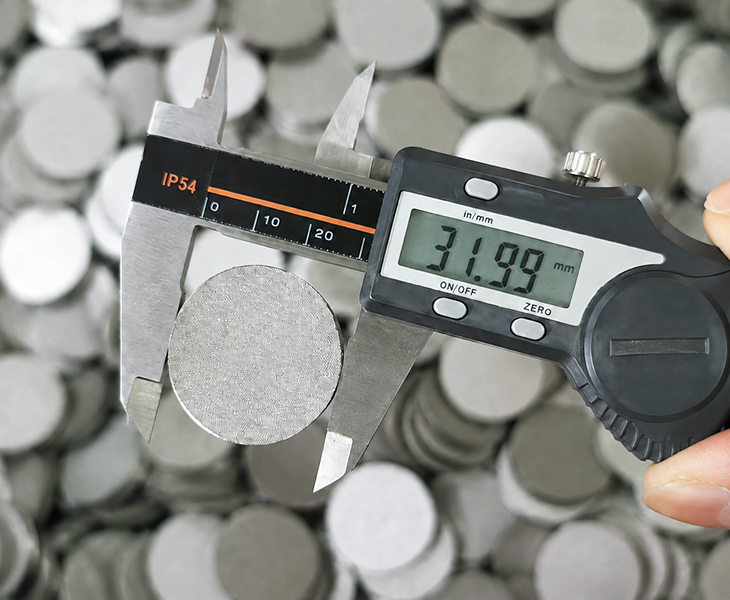
| Diameter (mm) | 5 – 500 (larger sizes available upon request) |
| Thickness (mm) | 0.5 – 10, depending on diameter and design |
| Maximum Operating Temperature | SS304: ≤ 600℃ (≤ 500℃ recommended for long-term use in oxidizing atmosphere) SS316 / 316L: ≤ 650℃ – 700℃ Nickel Alloy (e.g. Inconel 600): ≤ 800℃ Titanium: ≤ 300℃ (long-term) Exact temperature limits depend on specific alloy grade. |
| Recommended Maximum Differential Pressure | ≤ 0.6 MPa (depending on filtration rating and design; higher ratings available upon request) |
| Comparison | 304 Stainless Steel | 316 Stainless Steel | 316L Stainless Steel | Nickel Alloys | Titanium |
| Typical Composition | 18–20% Cr, 8–10.5% Ni | 16–18% Cr, 10–14% Ni, 2–3% Mo | 16–18% Cr, 10–15% Ni, 2–3% Mo, C≤0.03% | Nickel-based alloys with Cr, Co, Mo, Al, Ti and other elements depending on grade | Commercially pure titanium or titanium alloys |
| Key Characteristics | Balanced corrosion resistance, strength and cost | Improved resistance to pitting and crevice corrosion due to Mo | Low-carbon grade with improved resistance to weld-related intergranular corrosion | Excellent high-temperature strength and corrosion resistance | Excellent chloride resistance, low density and high strength-to-weight ratio |
| Mechanical Performance | Good general mechanical strength | Good mechanical strength and corrosion resistance | Similar strength to 316 with excellent weldability | Excellent strength retention at elevated temperatures | High strength-to-weight ratio |
| Typical Operating Temperature* | Up to ~600°C | Up to ~650–700°C | Up to ~650–700°C | Up to ~800°C, depending on alloy grade | Up to ~300°C for long-term operation |
| Main Advantages | Cost-effective and widely available | Better corrosion resistance than 304 | Well suited for welded filtration structures | Suitable for high-temperature and highly corrosive environments | Lightweight, strong and highly resistant to chloride-containing media |
| Limitations | Limited resistance to high-chloride and highly aggressive media | Less suitable for severe chloride environments than specialized alloys | Slightly lower yield strength than 316 in some specifications | Higher material cost than stainless steel | Higher cost; temperature capability depends strongly on grade and application |
| Typical Applications | Water treatment, food processing, general industrial filtration | Chemical processing, marine-related equipment, food and paper industries | Chemical and pharmaceutical equipment, welded filter assemblies | Petrochemical processing, high-temperature gas filtration, combustion systems | Desalination, chloride-containing media, specialty chemical and pharmaceutical applications |
| Parameter | Powder Sintered Disc | Sintered Mesh Disc (Multi-layer) |
| Structure | Homogeneous porous body formed by sintering metal powder particles | Multi-layer woven wire mesh stacked and sintered together |
| Pore Distribution | Tortuous, interconnected pore channels with a broad pore size distribution | Uniform, straight-through pores defined by mesh weave and layering |
| Filtration Performance | Depth filtration – retains particles throughout the entire cross-section | Surface filtration – retains particles primarily on the upstream surface layer |
| Pressure Drop | Relatively higher due to tortuous pore paths | Relatively lower due to straight-through pore channels |
| Cleanability | Harder to clean; backwashing is less effective; often requires chemical cleaning or replacement | Easier to clean; high backwash efficiency due to smooth surface and uniform pores |
| Mechanical Strength | High compressive strength, but limited tensile/flexural strength | Excellent overall strength – high tensile, burst, and impact resistance |
| Typical Applications | High-precision liquid/solid separation, gas filtration, chemical dosing, pharmaceutical, fine chemicals | Pre-filtration, polymer filtration, high-pressure hydraulic systems, fluidized beds, steam filtration |
Okay. FiltEdge supports you to customize your Sinteredfilter disc based on your drawing. You only need to provide CAD or PDF drawings of the external dimensions, scheme method, thickness, accuracy, and material requirements. Our engineers can provide you with a feasible plan.
To better customize the Sintered filter disc, we suggest that you provide the following information:
- Operating conditions: filter media (gas/liquid/melt), operating temperature, system pressure, flow requirements
- Filtration requirements: filtration accuracy, maximum allowable pressure drop, inlet and outlet particle concentration
- Equipment interface: filter disc installation size, sealing method (such as flange/clamp/welding), sealing surface requirements.
- Cleaning method: Is backwashing used? Cleaning frequency? Have you come into contact with chemical cleaning agents?
- Certification report: Is FDA/GMP compliance required? Do I need a material certificate? And do you need any other compliance documents that comply with your local/sales market?
The more complete the information you provide, the more matching the solution we will provide for you.
Of course. We can usually provide you with 3-5 pieces of sintered filter disc samples for working condition verification. And it will record material reports and precision testing data of the samples to prepare for mass production in the later stage, ensuring that the same process standards and testing procedures are followed for bulk production, and providing you with bulk products of the same quality as the samples.