Introduction
Still having trouble with the procurement and use of dust filter bags? READING ON HELPS.
Dust collector filter bags are commonly used filtering components in industrial dust collection systems, used to separate and collect solid particles and dust in the air to achieve gas purification and dust separation. The strong select-ability of the material and process makes it extremely versatile, with irreplaceable advantages.
However, precisely because of its strong select-ability, sometimes it can cause us problems. An inappropriate choice of industrial filter bag can lead to low filtration efficiency, but increased operating costs, and even more seriously, production suspension.
Finding a good SOP can achieve twice the result with half the effort.
Dust Collector Filter Bags: Choosing Based on Filtering Requirement.
Different filtering substances have different characteristics, which requires you to select the appropriate filter material based on these characteristics.
For wood dust: Focus on choosing filter materials that can efficiently capture larger particles to achieve the desired filtering effect.
For metal dust: Focus on choosing filter materials that can efficiently capture fine particles, are resistant to high temperatures and corrosion to achieve the desired filtering effect.
For chemical dust: Focus on choosing filter materials that are resistant to chemical corrosion and have high filtering accuracy to achieve the desired filtering effect.
Dust Collection Filter Bags:Material is Basics.
Firstly, clarify the characteristics of the filter material: chemical properties, temperature, particle characteristics. Then, follow these conditions, select the filter material that meets the requirements. The appropriate filter material is the basis for ensuring the optimal efficiency of the dust removal system.
The filter material must be compatible with the chemical properties and operating temperature of the substance to be filtered.
In addition, materials with higher hardness, irregular shapes and larger particles will have higher requirements for the wear resistance of the filter material.
Polyester Filter Bag
The polyester filter bag offers high cost-effectiveness and is suitable for medium-low temperature environments. It has poor acid resistance, good resistance to dry alkali, and excellent wear resistance.
Polypropylene (PP) Filter Bag
PP stands for polypropylene, which is a lightweight and cost-effective general-purpose thermoplastic. The PP filter bag is suitable for medium-temperature environments and has good acid and alkali resistance, especially strong resistance to wet acids and strong alkalis. It also has a certain hydrophobic property.
PPS Filter Bag
Polyphenylene Sulfide is a high-performance engineering plastic. It has excellent heat resistance and can withstand temperatures up to approximately 160℃ for a long time, and up to 190℃ for a short period. PPS filter bags are renowned for their resistance to chemical corrosion, high strength, and flame retardancy. They are mainly used for the treatment of high-temperature and highly corrosive flue gases, such as in coal-fired boilers and waste incineration.
P84 Filter Bag
The P84 filter bag has a high temperature resistance of approximately 260℃, excellent chemical resistance, resistance to wear and stretching, and anti-hydrolysis properties. Its irregular cross-section provides a large surface area, resulting in high dust removal efficiency. It performs exceptionally well in industrial environments with high temperatures and strong corrosiveness.
Aramid Filter Bag
An Aramid filter bag, with high temperature resistance (approximately 200℃), excellent wear resistance, but poor hydrolytic stability, and sensitive to humid flue gas. It is suitable for dry and high-temperature environments, such as the tail section of cement kilns and steel smelting sites.
Fiberglass Filter Bag
The fiberglass filter bag has excellent high-temperature resistance (approximately 280℃), high tensile strength, but is not resistant to folding, not wear-resistant, and is afraid of fluorides. It has outstanding chemical stability and dimensional stability. This filter bag is suitable for harsh environments, including the removal of dust from high-temperature flue gas and the filtration of corrosive chemical substances.
The filter bag can also be coated with polytetrafluoroethylene (PTFE) film to improve filtration efficiency and cleaning performance. After special surface treatment, it is used for high-temperature flue gas filtration in industries such as carbon black, steel, and building materials.
PTFE Filter Bag
Teflon filter bags possess long-term high-temperature resistance (approximately 260℃), acid and alkali resistance, excellent chemical stability, high filtration accuracy, ease of cleaning without sticking, good wear resistance. These high-performance industrial filter bags are suitable for high-precision filtration in highly corrosive or high-temperature environments.
Dust Collection Filter Bags With Post-treatment
Based on specific application scenarios and cost considerations, sometimes you can choose more economical filter materials and appropriate post-processing techniques, which can provide additional functionality to the filter bags, thereby replacing the more expensive filter material solution.
Baghouse Filter Bags with Singeing and Calendaring Processes
Singeing refers to the process where the loose surface fibers are burned off by flames, mainly used for filter bags made of polyester, PPS, etc., to prevent fiber shedding and facilitate cleaning.
Calendaring involves applying high-temperature rollers to compress the surface, mainly used for filter bags made of polyester, etc., which can make the surface smoother, reduce resistance, and facilitate cleaning.
These are two common surface finishing processes used for non-woven filter bags such as needle-punched felts, and they are often used in combination. The process of scouring and buffing helps to optimize the surface structure of the filter bag, improving filtration and cleaning performance.
It is a key process for enhancing filtration performance, prolonging filter material lifespan, and saving energy. It makes the filter bag surface smoother, with more uniform pore sizes, improves filtration efficiency and accuracy, and enhances the wear resistance of the filter bag, extending the product’s lifespan.
Cement Filter Bag with Waterproof and Oil-resistant Treatment
This process creates a layer of nanoscale hydrophobic and oleophobic films on the surface of the filter material, making it breathable and water-permeable. While blocking water and oil, it still maintains the permeability or water-permeability of the filter material.
This meets the filtering requirements under special conditions.
For example, the filter materials in cement plants usually contain wet flue gas, condensation or oily dust, which can cause the “bag clogging” problem. This special filter bag reduces the affinity of the filter material for water and oil through surface treatment, thereby ensuring that the dust removal system of the cement plant can operate stably for a long time.
Dust Filter Bag with Lamination Process
The Lamination Process is a technique that layers a microporous film (typically expanded polytetrafluoroethylene PTFE) onto the surface of conventional filter materials (such as needle-punched felts) through a special process, thereby forming a dense and smooth surface filtration layer.
This treatment enables “surface filtration” of the filter bag, meaning that dust is retained on the film surface and does not enter the filter material interior.
You can envision it as giving an ordinary filter bag a highly efficient, smooth, and non-greasy “raincoat”, thereby enhancing the functionality of the filter bag.
The benefits of this treatment
Extremely high filtration accuracy: It can efficiently intercept sub-micron particles (such as PM2.5).
Easier cleaning: The surface is smooth, and the dust cake is easy to peel off, resulting in more stable operating resistance.
Anti-adhesion: It can effectively deal with wet and sticky dust.
It is mainly used in working conditions with strict emission requirements (such as ultra-low emissions), and for handling fine, damp or sticky dust (such as waste incineration, chemical industry, carbon black, and cement kiln tailings).
Dust Collection Filter Bags Must Match Your Bag Filter
Cleaning Method of Industrial Bag Filter
Different bag filters have different requirements for the filter bags. The selection of filter bags should match the cleaning method of your dust removal system, so that your dust removal system can maintain efficient filtration performance and operate stably for a long time.
Pulse Jet Cleaning
The cleaning method under this system has the highest requirements for the strength and toughness of the filter bags.
If you are using this system, you need filter bags that can withstand the impact of instantaneous reverse high-pressure airflow. This requires the filter bag material to have high tensile strength and be wear-resistant (especially at the bag opening area).
It is often paired with cylindrical bags, with elastic sealing rings at the bag opening, and good sealing. Commonly used materials are polyester, PPS, etc., with needle-punched felts and coated. The filter material usually has a higher weight (such as above 550 g/m²).
Reverse Air Cleaning
The cleaning method in this system has high requirements for the flexibility and fatigue resistance of the filter bags. If you are using this system, you need filter bags with good flexibility that can be repeatedly bent without fatigue or fracture, so as to effectively deform and clean in the low-frequency reverse airflow.
It is often paired with long filter bags, and the filter material is relatively soft. Commonly used filter bags are glass fiber or those made of flexible materials.
Vibration Cleaning
The cleaning method in this system has high requirements for the wear resistance and structural stability of the filter bags. During cleaning, the filter bags are subjected to mechanical shaking and vibration, so they need to be firmly sewn and wear-resistant (especially at the contact points with the hanging parts and adjacent components).
It is usually paired with flat bags or round bags with internal support frames, and the filter bags need to have good toughness.
Custom Filter Bag – Dimensions and Specifications
Dust filter bag size: The length, width, diameter, etc. of the filter bag must match the frame and container of the filter. Filters that are too large or too small will cause installation difficulties or affect the filtering effect.
Air cloth ratio: The volume of cubic feet of air passing through the filtering medium per minute per square foot is a key indicator for ensuring the efficient operation of the dust collector.
Generally speaking, the lower the ratio of air to filter fabric, the more effectively the system can remove dust from the working environment.
Choosing the appropriate air-fabric ratio is to ensure that the filter fabric can handle an appropriate air flow per unit area, avoiding excessive pressure difference or insufficient filtration.
Pressure Matching
You need to determine the design pressure of the filter airflow. Based on this, decide whether to choose filter bags that can withstand high pressure, so that they will not be overly compressed or damaged during operation.
Dust Collection Filter Bags: Sealing Installation
Sealing design of dust collector filter bags: The design of the filter bags must be compatible with the sealing system of your filter, ensuring a tight connection between the filter bags and the filter frame without any leakage.
Installation method of dust filter bags: The hooks, diameter and installation method of the filter bags should match the connection system of the filter to ensure the stable use of the filter bags.
Precautions for Selecting Baghouse Filter Bags
Filter Bag Selection Based on Hazardous Dust
You need to pay particular attention to whether the dust is flammable, in order to determine whether to use materials with anti-static properties (such as anti-static polyester, PTFE-coated filter bags). These filter bags can effectively reduce static electricity accumulation and prevent the occurrence of fires.
For dangerous/high-temperature dust, use mixed materials, such as PTFE/aramid.
Please remember to carefully review the relevant regulations of your state and localities to correctly identify and manage combustible dust, and ensure safety.
Details of Dust Collection Filter Bag
The accessories of the filter bags and their sewing are also worthy of attention. These aspects will affect the sealing performance, durability and installation convenience of the filter bags, and thus are crucial for the normal operation and maintenance of the dust removal system.
Dust Filter Bag Accessories
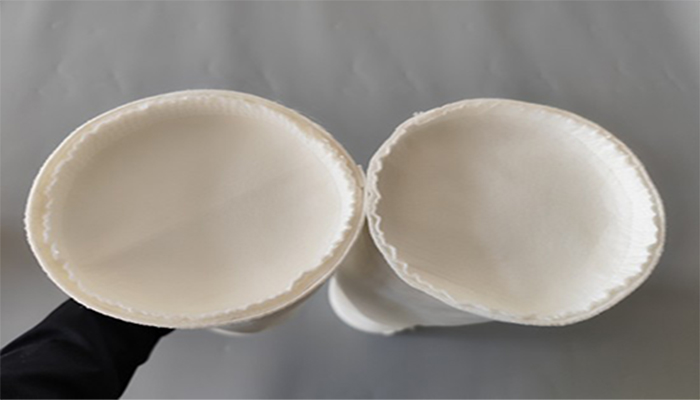
Bag Mouth: Spring ring bag mouth, with excellent sealing performance. The inverted-blowing type commonly uses the hanging type bag mouth installation, which is convenient.
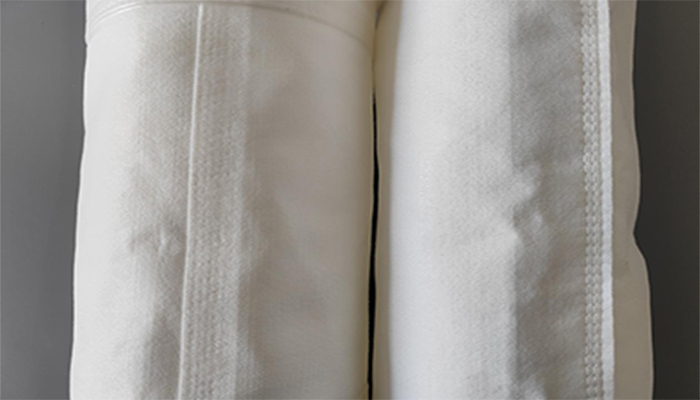
Bag Body Connection: Can be connected using either the economical ordinary three-thread machine sewing or the zero-leakage high-strength heat fusion welding, which is suitable for high-value and high-demand filter bags.
Bag Bottom: Standard sealing bottom or reinforced bottom (applicable for long filter bags, adding a wear-resistant layer or strengthening the sewing to prevent premature wear at the bottom).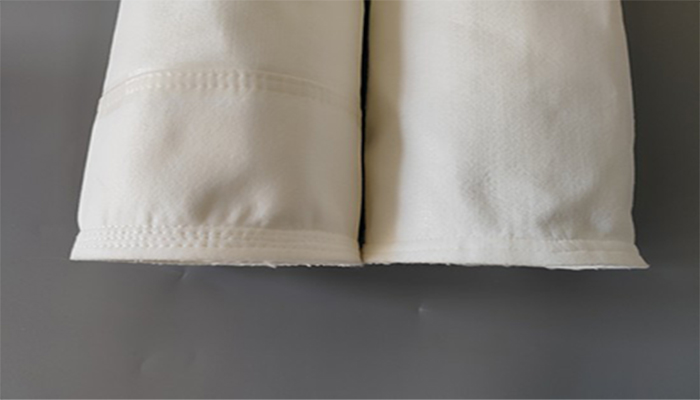
Sealing of Dust Collection Filters
Thread stitching connection
The process is mature, the cost is low, it is widely used, and it is suitable for most types of filter bags, especially fabric filter bags.
It has high strength and can withstand large tension and stress. Damage can be relatively easily repaired.
Leakage may occur under high temperature or high pressure, and the thread material may deteriorate due to acid or alkali corrosion.
Hot melt connection
High cost, demanding technology, requires precise temperature control and equipment.
Seamless connection, better sealing performance, suitable for high-temperature environments, good corrosion resistance, good strength, usually can withstand high tension and stress, suitable for certain specific filter materials, especially polyester and PTFE.
Repair is difficult, requires re-hot melt connection, and the effect is poor.
A Reliable Supplier of Dust Removal Filter Bags
Understanding dust filter bags is an important step, and finding a reliable supplier of filter bags is another important step.
That is because although understanding the theoretical knowledge of filter bags is indispensable, practical applications usually require engineering expertise to deal with various challenges.
ABOUT FILTEDGE
20 years of industry experience
A powerful technical think tank
Professional 24-hour online service
High-efficiency filtration
Custom filter bag experience
Our products are sold to over 100 countries and regions
100% after-sales contact—proactive understanding of customer evaluations have helped us make progress by identifying what we have done well and what needs improvement.
We always adhere to the concept of thinking what our customers think and providing the best filtration solution, saving you time and worry in our cooperation.
A genuine FILTEDGE case – earning the trust of customers and long-term cooperation.
Case: Design of Low-cost Filter Bags to Replace High-cost Filter Bags for a Cement Plant.
Original high-cost solution: Use PTFE filter bags.
Material selection: PTFE filter bags, which have extremely high chemical resistance and heat resistance, are suitable for environments with high temperatures and high corrosiveness.
Disadvantages: PTFE filter bags are relatively expensive, and the maintenance and replacement costs are also high.
Substitution Analysis
The necessity of substitution:
PTFE filter bags perform excellently in some high-temperature, highly corrosive and adhesive environments. However, through the analysis of the specific working conditions (temperature, acidity and alkalinity, adhesiveness) of this cement plant, it is found that PTFE filter bags exceed the requirements at a higher cost.
Feasibility of alternative: PET filter bag + PTFE coating
This type of filter bag is made of polyester fiber (PET) and coated with a layer of PTFE on the surface. Polyester serves as the base fabric, providing good mechanical strength and excellent filtration efficiency.
while the PTFE coating enhances anti-adhesion, chemical resistance and high-temperature resistance, making it also meet the filtration requirements and working conditions of this cement plant.
Result
More economical, with a 35% cost reduction.
Meets environmental protection requirements and emission standards.
Satisfies filtration needs, providing sufficient filtration effect, and has good wear resistance and tensile strength.
Without affecting the filtration effect, it has significantly reduced the investment and maintenance costs of cement plants.
Are you ready to select the right filter bags for your dust collection system? Please contact our experts to discuss your requirements and find the most suitable filter bags for your business.
FAQ
1.Dust collection filter bags:how to improve the filtration efficiency?
The filtration efficiency can be enhanced by choosing the appropriate filter bag material, increasing the air-to-cloth ratio or cleaning the filter bags regularly.
2.How to deal with leakage problems in the dust collection system?
Conduct a thorough inspection, systematically assess the problem, and make targeted improvements.
You need to promptly check the integrity and sealing of the filter bags, replace the damaged ones if necessary, and inspect the pressure and airflow settings of the system.
3.Dust filter bags:How to judge the quality?
High-quality filter bags usually have good air permeability, high-temperature resistance, and corrosion resistance, and their surfaces are uniform and free of obvious defects.
4.What is the allowable pressure difference?
The allowable differential pressure (ΔP) of a filter refers to the pressure difference between its inlet and outlet. It is one of the important parameters for evaluating the performance of a filter and is usually used to measure the working load and filtration effect of the filter during operation.
Excessively high pressure differential usually indicates: clogging of the filter element or filter bag; reduced filtration efficiency; increased risk of equipment damage.
Factors affecting allowable pressure drop:
Type and structure of filter material: Different filter materials have different filtration accuracy and air permeability, and the design of the filter material affects the pressure drop.
Concentration of dust or impurities: The more particles in the filtered medium, the easier the filter is to clog, and the greater the pressure drop.
Flow rate and velocity: Higher flow rate or velocity usually leads to a higher pressure drop.
Filter usage time: As the usage time increases, the filter element gradually accumulates dust, and the pressure drop will increase.
Measurement of allowable pressure drop:
Typically, filters are equipped with pressure differential gauges. By monitoring the pressure difference between the inlet and outlet, maintenance personnel can determine the working condition of the filter and decide when it is necessary to clean or replace the filter element.
The allowable pressure difference of a filter is the maximum pressure difference that the filter can withstand during operation. Exceeding this pressure difference may affect the filtration effect or even damage the equipment. Therefore, regularly monitoring the pressure difference and cleaning or replacing the filter material as needed is the key to ensuring the normal operation of the filtration system.