

What Is a Felt Filter?
Felt Filter strictly refers to needle punched nonwoven filter felt, constitutes a material-level concept, equivalent to needle felt or filter felt; In FiltEdge practice, it is also occasionally used to informally describe filter bags or cartridges made of felt, which belongs to the device/element level concept. In order to avoid confusion, suffixes are often added for clarification, e.g. felt filter bag or felt filter cartridge; Furthermore, specific qualifiers are often applied corresponding to different applications, e.g. felt filter for dust collection, felt filter for liquid filtration, industrial felt filter media.
FiltEdge Typical Felt Filter by Different Materials
In the field of industrial filtration, organic, inorganic or blended fibers are needle punched to achieve filtration requirements in a wide range of temperatures and alkaline & acid environments. Depending on the filter materials, FiltEdge offers a wide range of filtration felts to meet the challenges of your complex environments. The list is only a selection and can be customized to meet specific needs.

Versatile, cost-effective filtration for dust, liquids and process gases


Medium/normal temperature acid and alkali corrosive dust removal filtration

High temperature acid and alkali dust, liquid and process gas filtration

High-temperature wear-resistant dust collection, liquid filtration and process gas filtration

High temperature and low resistance, high efficiency dust removal and process gas filtration

High temperature and high corrosive dust removal, liquid and process gas precision filtration

High-temperature, cost-effective dust removal filtration
FiltEdge Typical Felt Filter Applications
Although all of them are needled, but FiltEdge felt filters can be applied in different filtration fields by different process combinations, mainly for the following three categories.
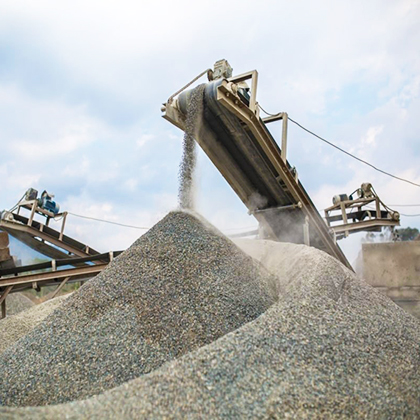 Dust Collection-Emission Control
Cement, steel, power plant, waste incineration
Features: high dust concentration, high load, needs dust cleaning
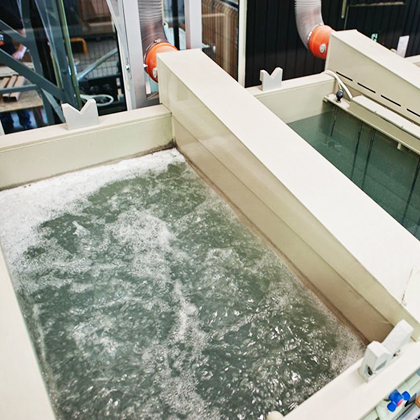 Liquid Filtration-Product Purification
Chemical liquids, water treatment, food and beverage, plating solution, oil, pharmaceuticals
Features: Micron solid/liquid filtration
 Process Gas Filtration-Process ProtectionCoating line exhaust gas, chemical exhaust gas, metallurgical process gas, drying system gas, catalyst protection filtrationFeatures: oil mist, corrosive gases
Key Features of FiltEdge Felt Filters
Felt Filter is an ideal filter media due to its unique three-dimensional irregular void structure by the needle punching process, which gives it many different properties from other filter medias. Combined with FiltEdge’s wide range of finish processes, FiltEdge ensures that you have combination of (ultra-) low emissions, long term operation stability and the lowest total life cycle costs.

Fibers intersect in three dimensions to form irregular voids and efficiently intercept fine dust.

70-90% pore space to minimize air/water flow resistance

Mechanical needle entanglement, no fiber shedding under high velocity air/water flow

Customized needle density, basis weight and air permeability solutions based on fan pressure, balancing filtration efficiency and energy consumption.

Reduced pulse jet frequency saves compressed air and energy consumption

Diverse materials (PET, PPS, P84, PTFE, Nomex), covering acidic, alkaline, and oxidative environments.

Compatible with a variety of post-treatment processes, such as singeing, glazing, calendering, impregnation, coating, lamination, anti-static treatment, etc.

The most economical and long-lasting industrial filtration solution
What Is a Needle Punched Felt?
Needle punched felt is a three-dimensional non-woven material formed by repeatedly staple fibers entanglement through mechanical needling process, with a high thickness (usually 1-3mm +), irregular pores, high porosity. The raw material may include inorganic fibers, organic fibers, stainless steel fibers and combined. Furthermore, the felt can undergo a variety of finishes and composite processes. Due to its versatility, it is widely applied within the filtration/separation industry for high-load industrial dust collection and liquid filtration.


What Is the Mechanism of Your Felt Filter?
The technical essence of felt filter lies in the synergy between mechanical entanglement and physical filtration dynamics. The core is the optimal ratio of drag coefficient and capture efficiency, and the efficient gas and solid filtration/separation is mainly achieved through “deep filtration + dust cake filtration” . At the initial filtration phase, the dust undergoes medium efficient deep filtration through the mechanism of inertial impaction, interception and diffusion within the felt filter; with the accumulation of dust in the surface layer to form a dust cake to realize the high efficient surface filtration. Liquid-solid filtration/separation is mainly deep filtration.
What Are Your Felt Filter Advantages & Limitations?
Advantages
- High Dust Load
Three-dimensional structure for high dust holding capacity - Suitable for High Concentration Conditions
Less likely to clog than woven fabric - Adjustable Filtration Efficiency
Achieved through: basis weight (GSM), thickness, surface treatment - Broad Finishes Adaptability
Combinable with: membrane(ePTFE) lamination, water & oil repellent and anti-static treatments
Limitations
- Low initial efficiency (when not laminated)
Dependent on dust cake formation - Rapid Resistance Increase
Difficult to recover from deep clogging - Highly Dependent on Dust Removal
Pulse jet dust cleaning design is critical - Dimensional Stability Issues
Affected by fiber types

Why Choose FiltEdge for Felt Filter?


FiltEdge LLC is a U.S. company established in 2025, supported by SFFILTECH in China, established in 2006. Manufacturing support is provided through SFFILTECH in China. Confirm product specifications, available quality documents, pricing and delivery in the quotation. Certificates must be checked for the relevant entity, facility and product. Support is arranged during business hours; any on-site service or warranty terms require separate agreement.
Comparison of FiltEdge Felt Filter with Several Common Filtration Medias
In addition to felt filter, FiltEdge offers many other filtration medias, which are applied in diverse fields with different raw materials, processing methods, physical forms, and unique characteristics, but are presented in similar rolls and sheets, which are easy to be confused. With its deep expertise and specialized focus within the filtration industry, FiltEdge offers a wide range of filtration materials and solutions.


What’s the Difference between Filter Bag & Filter Cartridge Made of Felt Filter?
As a widely used filter media, FiltEdge felt filter can be processed into many different styles of filter components, the two most mainstream forms you can encounter are filter bag and filter cartridge.

The most mainstream filter element style, flexible, dust/liquid/process gas filtration
High concentration, high flow, high filtration velocity
Typically a cylindrical bag configuration, with internal support structures mainly, such as bag cage, grille
Felt filter is the main filter media, woven fabric as a supplement, as well as others.
It can be dust cleaned by pulse jet for dust collection and process filtration

Pleated design, self-supporting, semi-rigid/rigid
Compact size, large filtration areas
Possible for dust/liquid/process gas filtration
Low concentration, low filtration velocity
Filtration media primarily consists of spunbond, wet-laid, and composite materials, with a smaller proportion of felt filters
Dust collection and certain process filtration applications allow for pulse jet cleaning
Why Do Your Felt Filters Rely On Dust Cake?
FiltEdge needled felt features uneven fiber pores from 5 to 20 microns, while many industrial dust particles are less than 5 microns, these fine particles will penetrate the media partially without dust cake, resulting in exceeded emission; Furthermore, without a dust cake acting as a protective barrier, the dust particles will be directly drilled into the deeper fibrous structures of needle felt, resulting in internal clogging of filter media, insufficient dust cleaning, increased flow resistance, and, ultimately, filter bag failure.
Felt filter shifts from the initial deep filtration by needed felt gradually as the accumulation of dust cake to the surface filtration, the gaps between particles within dust cake are very small gaps, forming dense dust filtration layer supported by the felt filter substrate which significantly improve the filtration accuracy, close to the “membrane filtration” effect. When the dust cake becomes too thick and the pressure drop increases, FiltEdge recommends proper dust cleaning and retains a proper residual dust layer to continue to act as a filter medium effectively.
No.
Felt filter refers specifically to filter felt produced through a needle-punching process. Although both needle punching and spunlacing (hydro-entanglement) belongs to the non-woven manufacturing methods, sharing certain process similarities, utilizing same raw materials and presenting sheet-like finished products format, the needled felt is generally thicker with higher tensile strength and less flexibility compared to spunlace nonwoven. Consequently, their applications differ significantly, spunlace materials are not classified as felt filters.
No.
Although they all called needled felt, but exhibit variable combination of raw materials, thickness, density and post-processing. Consequently, while the finished rolls all share a felt-like appearance, their performance characteristics differ vastly. It can be used in many areas, filtration is just one of them.
No.
Needle punching is only one of the filter material processing techniques, other common methods include woven, spunbond, meltblown, spunlace, wet-laid, hot air bonding, electrostatic spinning, sintering, etc., which do not necessarily have the same raw materials, present distinct properties, and are applied in different scenarios vastly.
Although the scrim is optional for the needle punching process, it is still required in most cases for needle felt filters, and its main function is to enhance tensile strength and minimize elongation and maintain dimensional stability. Filament or staple yarns are woven or warp knitted into the scrim. Generally, scrims made from continuous filaments offer superior strength, lower elongation, and more expensive. All FiltEdge dust collection filter bags are reinforced with a scrim. Furthermore, in order to ensure optimal chemical and thermal stability performance, FiltEdge utilizes raw material for scrim as felt layer, or one that possess superior performance characteristics.
Generally, wash cleaning is not recommended. If excessive dust accumulation or penetration leads to increased resistance or poor filtration performance, please increase the pulse jet frequency, pressure or duration in an appropriate and balanced manner; it is best to replace the filter bag directly if the problem can not be solved.
If it is necessary to wash clean for various reasons, please try to be extreme gentle to minimize the mechanical damage, the use of ultrasonic cleaning will be more effective. In case of oil contamination, a small amount of non-ionic surfactant may be added, air dry naturally or dry at low temperature, do not spin dry. After water cleaning, the filter media/bag will change the entanglement between the fibers possibly, resulting in potential structural collapse, clogging or enlargement of pores, decreased strength, thus ultimately reducing the filtration precision and efficiency, and failing to achieve the expected filtration effect and service life.
Of Course.
FiltEdge is an team of experienced filtration experts with first-class technical research and development capabilities, extensive application expertise and advanced manufacturing proficiency, which offers customized and developed solutions according to your operation conditions and needs, including but not limited to:
- Customization of felt filter raw material compositions, including type, fineness, and gradient structure;
- Development of customized finish processes and specialized treatment agents for your felt filters;
- Customization of felt filter parameters, such as thickness, density, width (within 2.2 meters), length, air permeability, and tensile strength;
- Customization of filter bag specifications, including styles, diameters, lengths, bag top and bottom configurations, reinforcement cuffs, stitching types and requirements, stitch density, sealing, snap bands, support rings, and so on.